Trip Diary: Conservation in Southeast Asia with Mike Baltzer

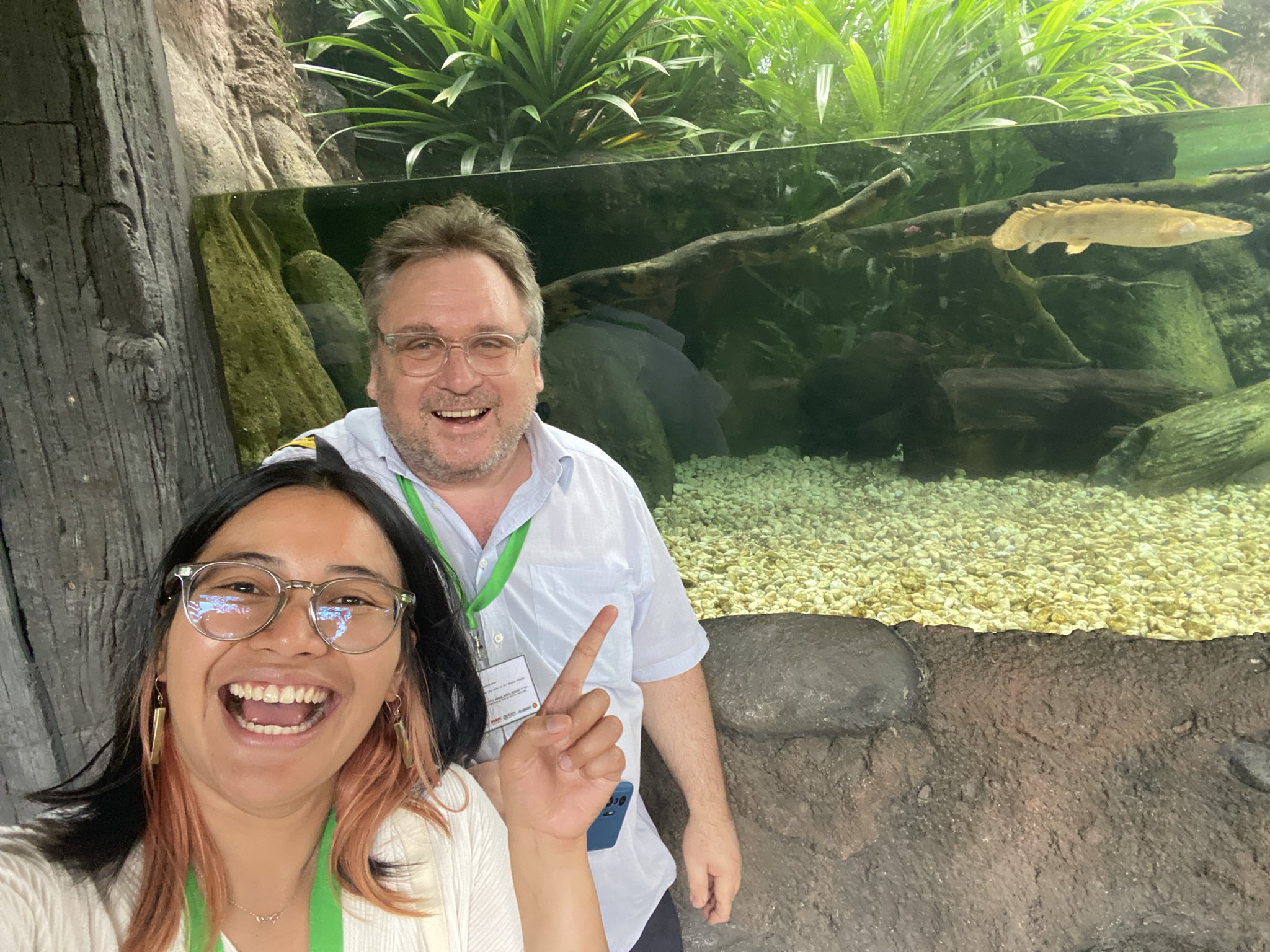
A photograph of a man and a woman in front of an aquarium. Conservation southeast asia.

Come with SHOAL to Southeast Asia to meet conservation partners and visit some of the world’s most exciting freshwater ecosystems first hand.

It’s been a busy Spring for SHOAL’s Mike Baltzer. Our Executive Director has just returned from a journey across Southeast Asia that took him from Singapore to Cambodia to Thailand and back to Singapore.

“The trip gave me an invaluable opportunity to connect with local experts, plan future collaborations and see some of the world’s most biodiverse freshwater ecosystems first-hand.”

Mike Baltzer, SHOAL

First stop Singapore

Starting in Singapore, Mike attended the Association of Southeast Asian Nations (ASEAN) meeting held at the Singapore Zoo, hosted by the IUCN SSC ASAP and Mandai Nature, to begin the process of designing an action plan for species conservation in Southeast Asia.

The meeting brought together experts from the region alongside those with an expertise in writing action plans for threatened species in the region, like Mike. The group discussed the process of developing this ambitious project, and how to ensure the results have the greatest impact.

“The ASEAN expert meeting was a wonderful opportunity to discuss SHOAL and freshwater conservation with national experts and potential partners, and find ways to move forward with action in each of the Southeast Asia countries.”

Mike Baltzer, SHOAL

A photograph of a man and a woman in front of an aquarium. Conservation southeast asia.
© Sheherazade, co-director of PROGRES

Mike was also able to meet up with some of our partners in Singapore including PROGRES, a conservation NGO in Sulawesi, Indonesia, which fuses science with the power of locally-led conservation action. Read more about PROGRES’ amazing work on our blog→

One of Indonesia’s leading conservation specialists Prof. Mirza Kusrini then met Mike for an enlightening and helpful discussion about potential partners in Papua and West Papua in Indonesia.

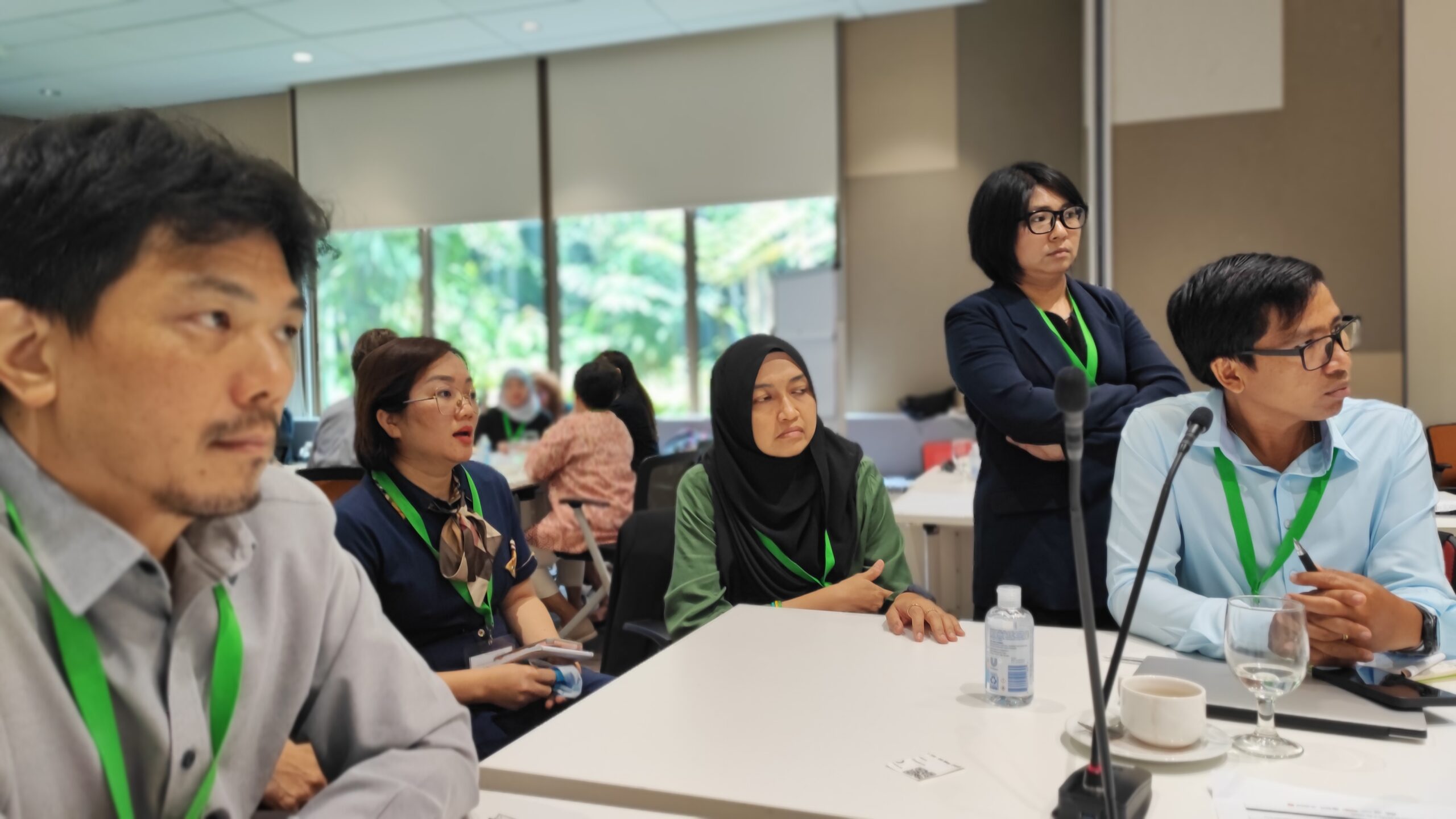
Four people sitting around a table looking forward, in a room with other people also paying attention in the background. Conservation southeast asia. Credit Mike Baltzer
© Mike Baltzer

Onwards to Cambodia

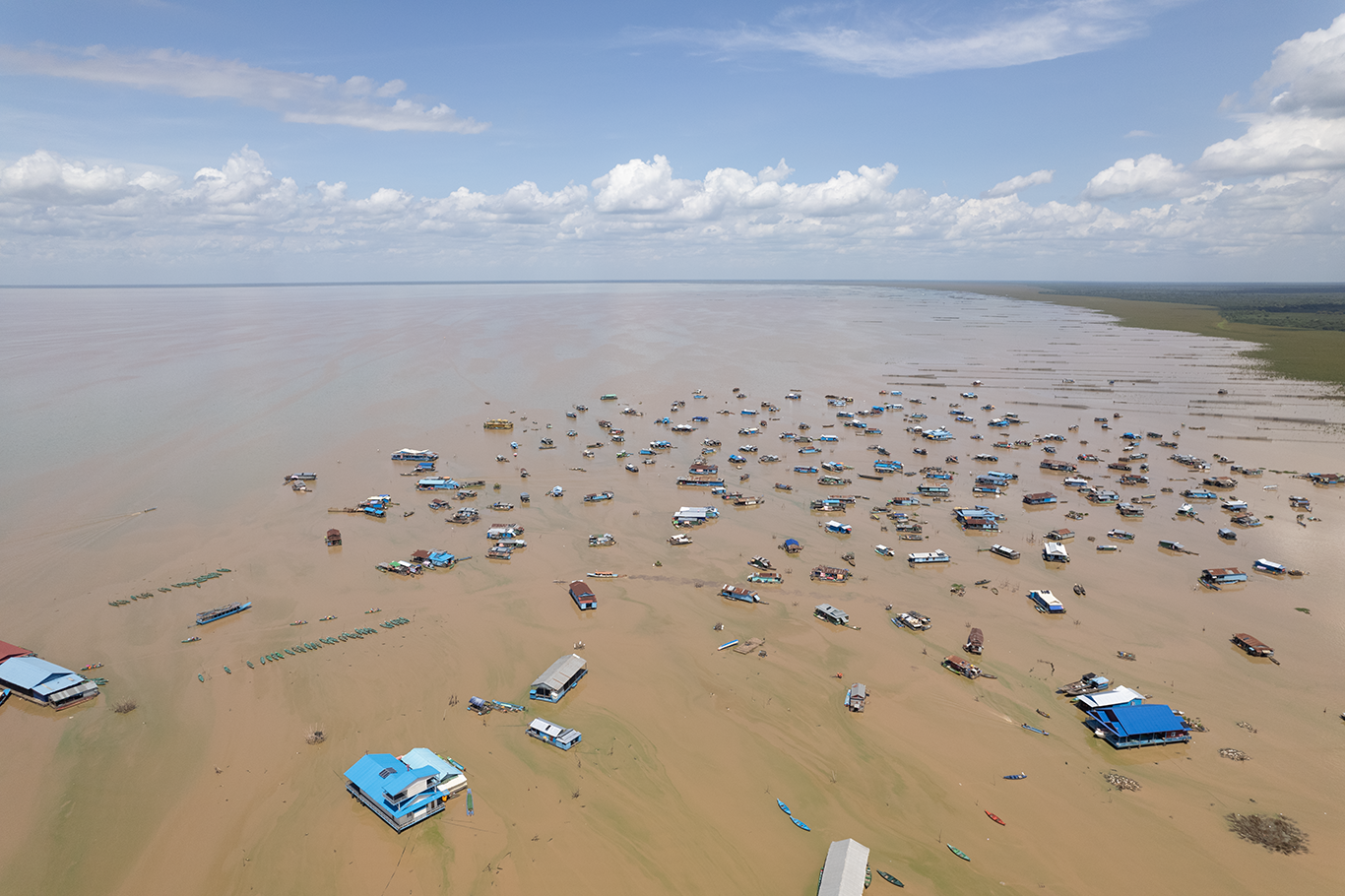
Mike then headed to Siem Reap, the home of the breathtaking Angkor Wat,  to meet potential partners and discuss future activities in the Tonle Sap lake in Cambodia. The area is one of the world’s most large and valuable wetlands.

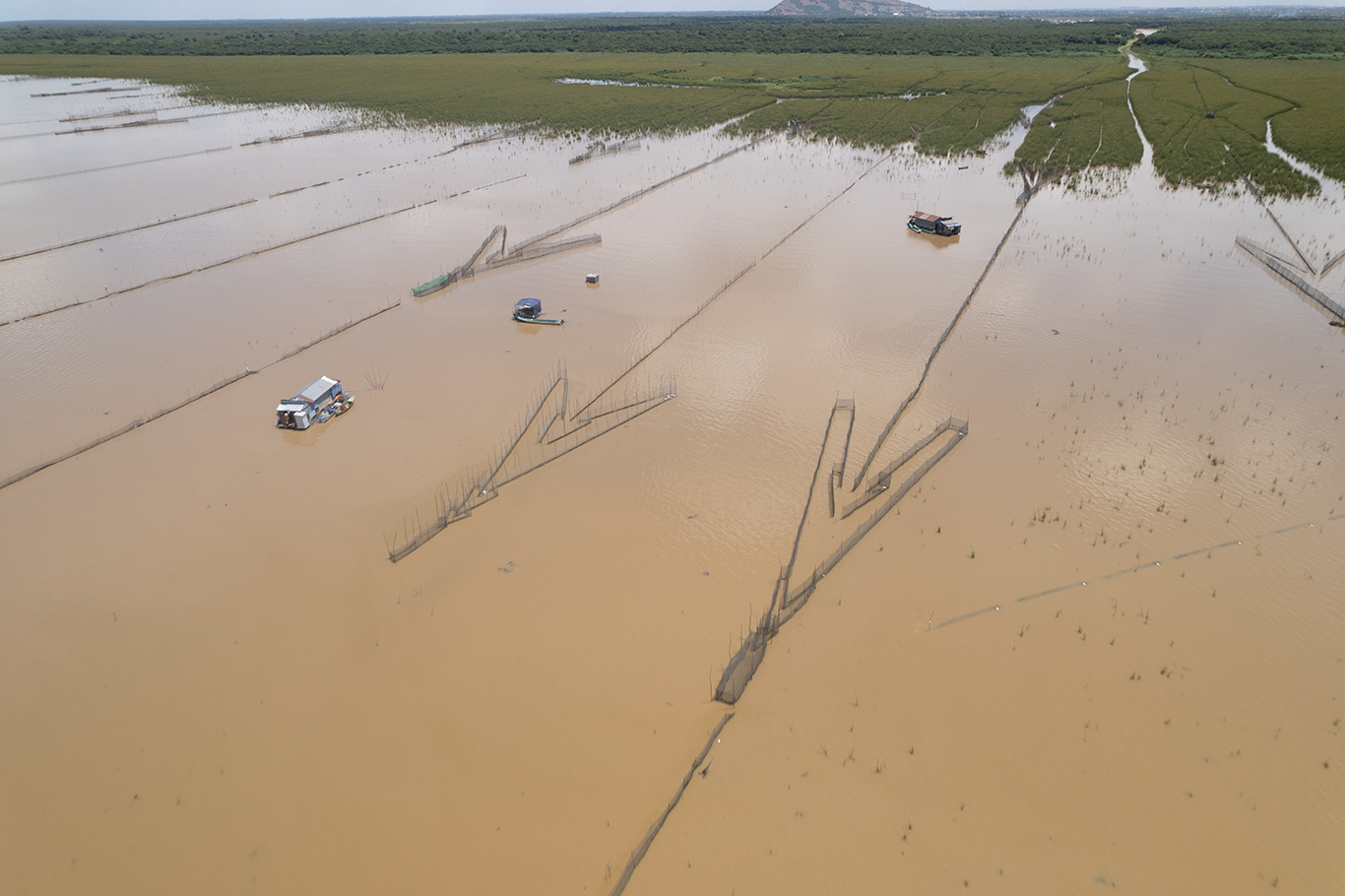
He and the team were able to capture some striking shots of the extensive fisheries on the lake, as well as explore potential conservation projects.

“In Cambodia, I was struck by the damage, caused by the COVID-19 pandemic, to the local economy and threat this now posed to natural resources as people seek ways to pay off loans and restore their businesses and income sources. It was clear to see that the great fisheries of the Tonle Sap were once again a vital source of food security during the toughest times.”

Mike Baltzer, SHOAL

An aerial view of a lake with dozens of floating houses on it. Conservation southeast asia. Credit Ben Hayes
© Ben Hayes
An aerial view of fisheries of the Tonle Sap, which look like big arrows on the lake. Conservation southeast asia. Credit Ben Hayes
© Ben Hayes

Thailand and back to Singapore

On return to Singapore Mike took the opportunity to stop over in Bangkok and meet with Dr Dindo Campilan, Regional Director of the IUCN Asia Regional Office, and his team to explore potential collaboration on projects in the region.

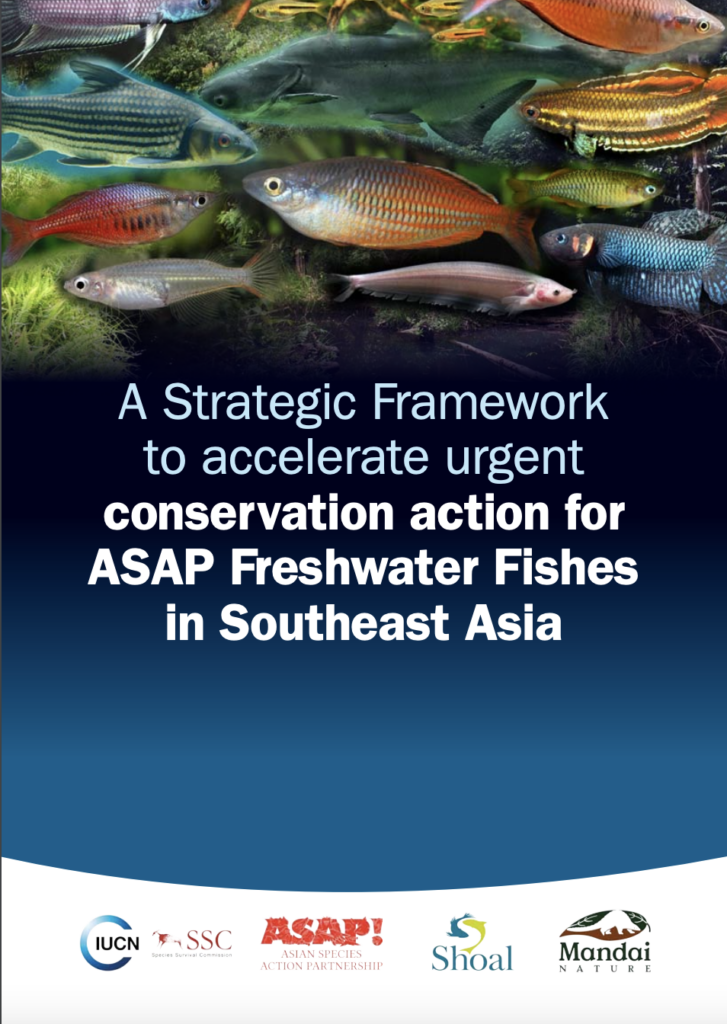
The next day, Mike returned to Singapore for a full day meeting with the IUCN SSC ASAP and Mandai Nature team to prepare for the launch of The Strategic Framework to Accelerate Urgent Conservation Action for ASAP Freshwater Fishes in Southeast Asia on 3rd July 2023.

The trip was drawing to a close, but there’s no way Mike could fly back to the UK without squeezing in a visit to the new Bird Paradise at Singapore Zoo, after being kindly given a ticket.

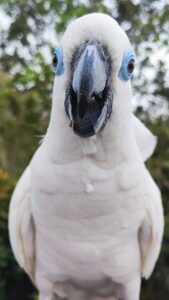
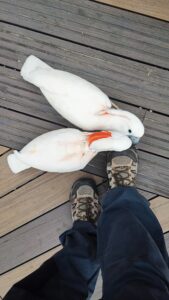
“Bird Paradise is incredible. You can walk through huge aviaries and really feel that you are seeing the birds in the wild – all with clear conservation messages and actions. And of course it was great to be harassed by beautiful salmon-crested cockatoos – one of my favourite birds!”

Mike BaltzerSHOAL

A cockatoo, white with orange crest, looking straight into the camera with its mouth open. Conservation southeast asia. Credit: Mike Baltzer Two cockatoos, white with orange crest, pecking a brown shoe. Conservation southeast asia. Credit: Mike Baltzer

Reflecting back and looking forward

Southeast Asia is considered the region with the highest number of species facing immediate extinction, and freshwater fish make up the largest group with almost 100 species Critically Endangered. As aquatic species in general are overlooked globally amongst conservation actions, there is presently very little targeted conservation action underway.

SHOAL is currently working with the IUCN Species Survival Commission’s Asian Species Action Partnership and Mandai Nature on a major new report which offers conservation hope for Southeast Asia’s most threatened freshwater fish.

“As we prepare for the launch of our new report in collaboration with IUCN SSC, ASAP and Mandai Nature it is important that we meet to discuss with as many local experts as possible on potential projects and partners. There are a lot of ASAP fishes there that need immediate attention so building capacity of local NGOs across the region is a high priority.”

Mike Baltzer, SHOAL

Based in Singapore, Mandai Nature are a conservation non-profit who host organisations including the IUCN Species Survival Commission (IUCN SSC) Center for Species Survival: Southeast Asia, and the IUCN SSC Asian Species Action Partnership (ASAP).

Formed under the IUCN SSC, the Asian Species Action Partnership (ASAP) are an alliance of more than 220 partners working to save Critically Endangered species in Southeast Asia.

Catching up with PROGRES (Sulawesi)

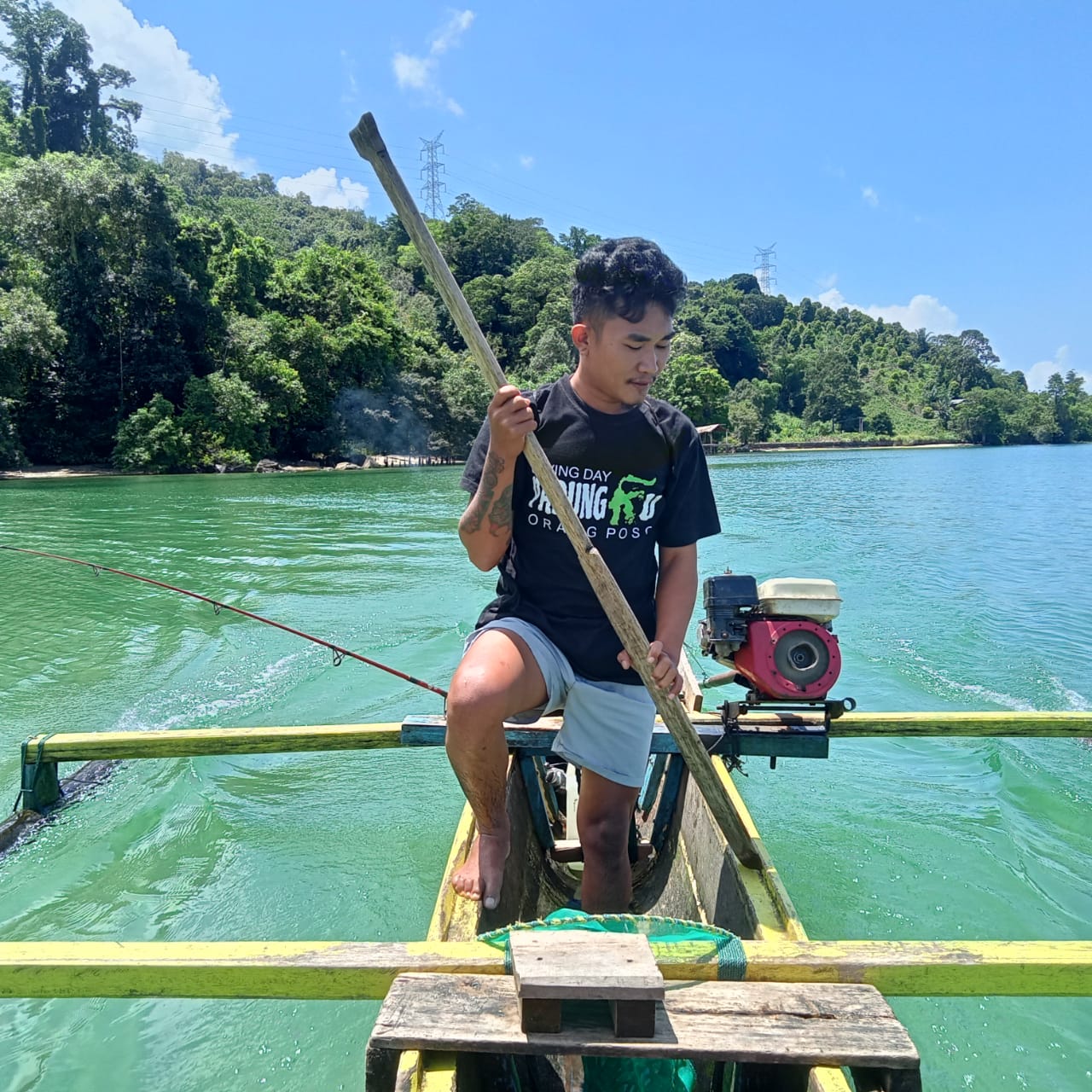
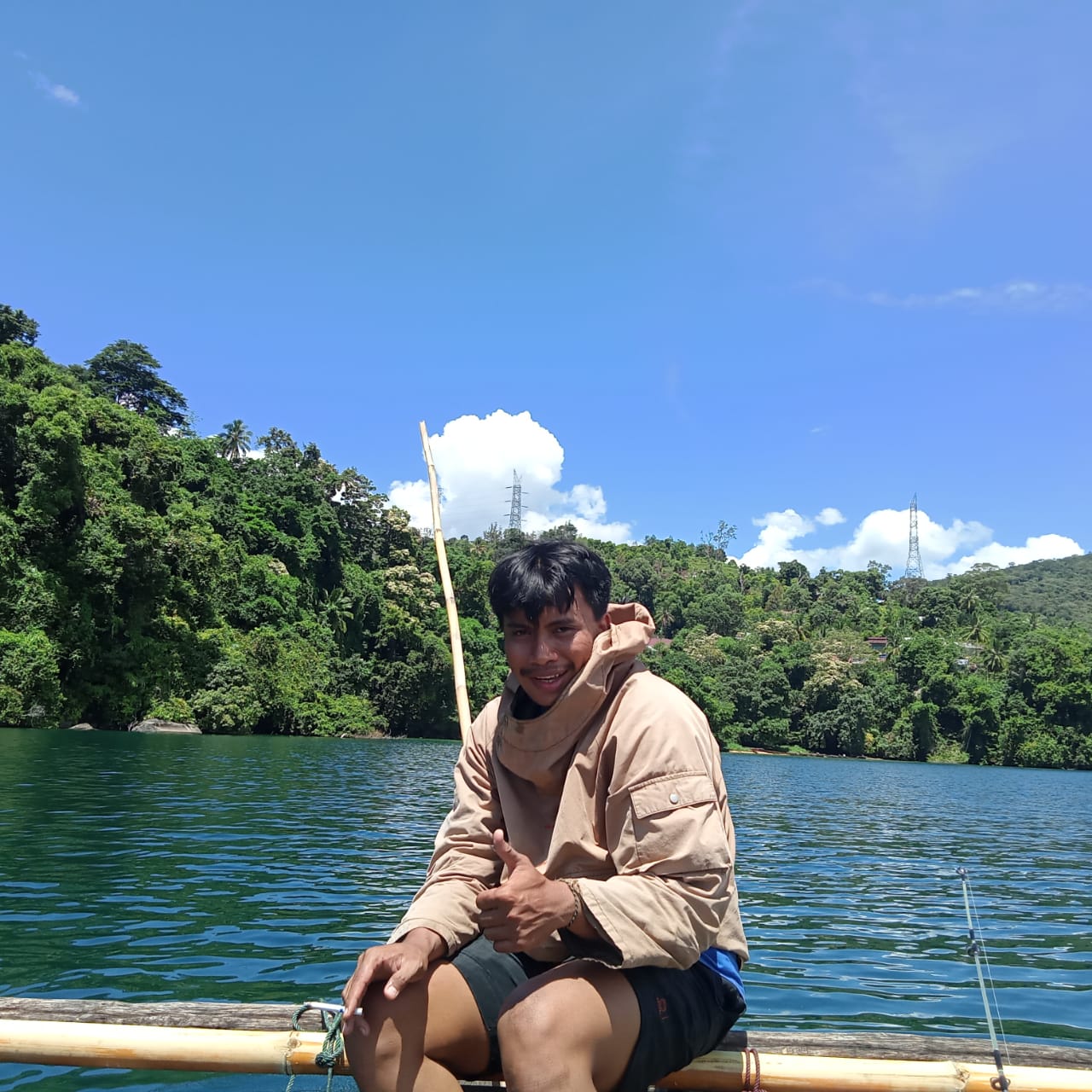
A photograph of a man who works with our partner PROGRES in Sulawesi, standing on the back of a boat in a lake.

One year after announcing them as our newest partner, it’s time to check in with PROGRES, a conservation NGO in Sulawesi, Indonesia.

One year after announcing them as our newest partner, it’s time to check in with PROGRES (Sulawesi Regional Ecological Conservation Initiative), a conservation NGO in Sulawesi, Indonesia.

A little backstory

Led by two Sulawesi native women, Sheherazade and Asnim A. Lanusi, PROGRES fuses science with the power of locally-led conservation action to ensure the success and sustainability of their work.

Working with the Asian Species Action Partnership in the Lake Poso region of Sulawesi, considered to be one of the most important ecosystems for freshwater fish conservation in the world. PROGRES’ Fish Programme is focussed on the search for three Critically Endangered fish that are endemic to the lake.

  • Duck-billed buntingi (Adrianichthys kruyti)
  • Rosen’s buntingi (A. roseni)
  • Poso bungu (Mugilogobius amadi)

The sharp decline of each species has been thought to be a result of tectonic activities in the region in 1983, alongside the damage by invasive species through parasites and diseases (Parenti and Soeroto 2004).

A photograph of a man who works with our partner PROGRES in Sulawesi, sitting on a boat in a lake.
© PROGRES

Meet Chilo and Felix

A key part of PROGRES’ work is engaging with young people in the local community to be conservation champions and lead the conservation initiatives.
Chilo and Felix work with PROGRES in Sulawesi and have been integral to the search for the duck-billed buntingi, one of our Top 10 Most Wanted Lost Fishes.

Chilo: “Konservasi adalah memberi kehidupan, kesempatan berwawasan, memberi kesadaran ada yang hampir hilang, untuk itu konservasi harus cepat dilakukan sebelum semuanya terlambat.”

Chilo: “Conservation is about nurturing life, an opportunity to learn, raising awareness that something is almost gone, for that conservation must be done quickly before it’s all too late.”

Felix: “Konservasi bagi saya adalah merawat lingkungan hari ini untuk kehidupan besok yang lebih baik.”

Felix: “Conservation for me is caring for today’s nature for a better life tomorrow.”

PROGRES are working in collaboration with fishermen around Lake Poso too, surveying 21 villages and one city to understand local livelihood, the dependence on Lake Poso and the importance of the fishes to local communities beyond their economic value.

Three fishermen, Om Pedi, Papa Jems, and Ngkai Iki, actively joined PROGRES’ survey activity, alongside 11 local youth. These fishermen and young people have become messengers explaining what the program was about to other parts of the communities.

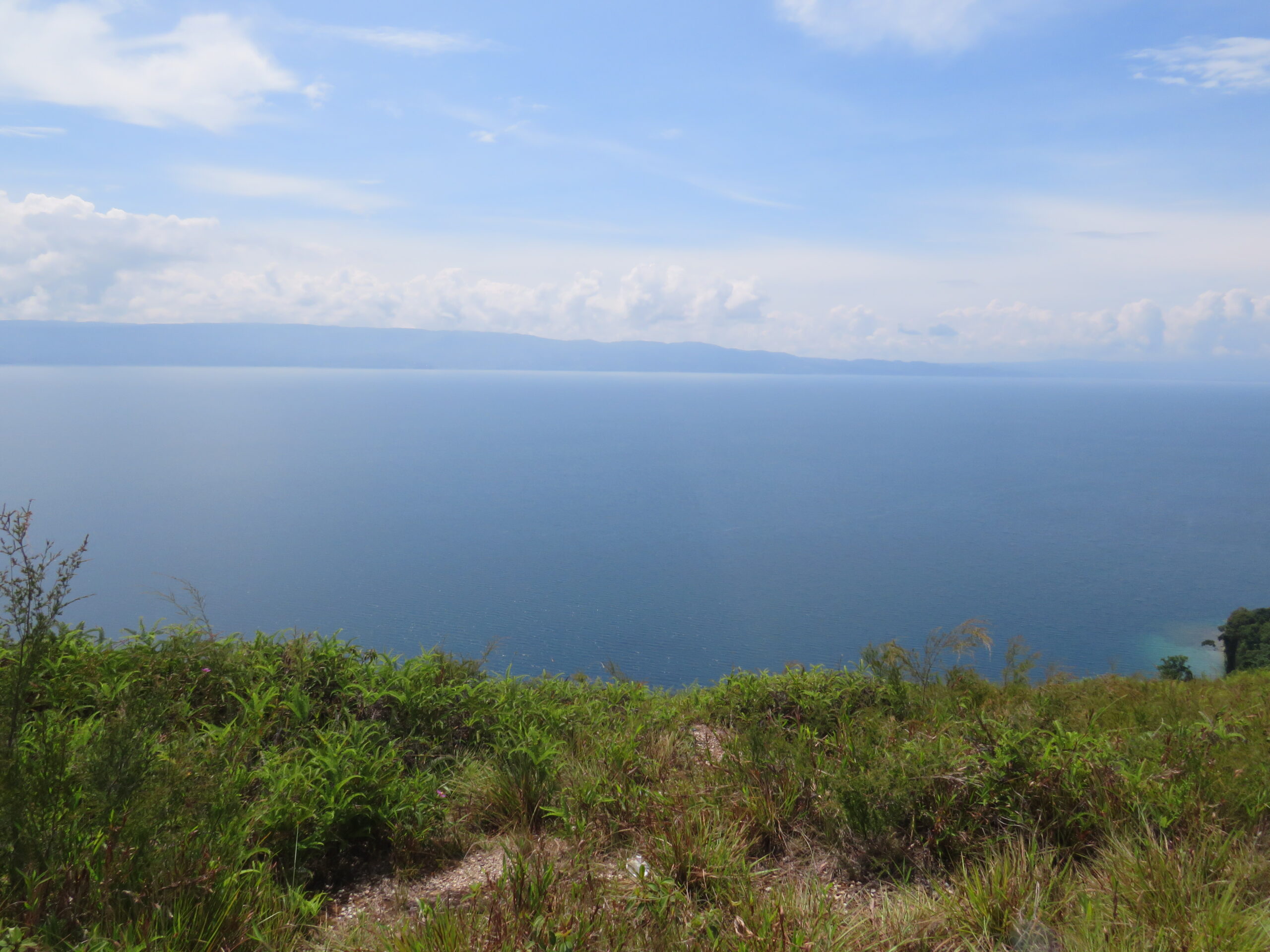
A photograph of Lake Poso, taken by PROGRES in Sulawesi.
© PROGRES

What have PROGRES been up to?

Extensive surveys have been conducted every month to look for the ASAP targeted fish species. In total, 18 surveys were conducted in water areas in front of Bancea, Leboni, and mainly Peura, Dulumai, and Tolambo villages.

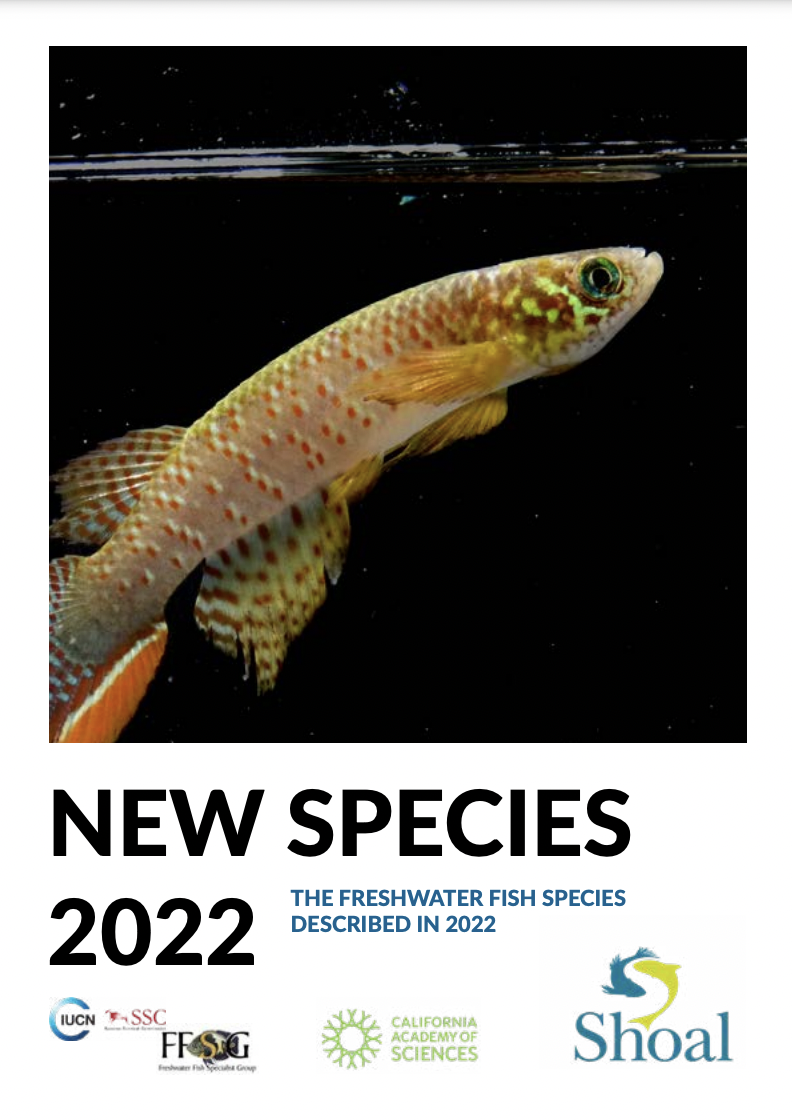
New Species 2022 report released

A photograph of a fish with a black head and a red and white striped body, one of the new species featured in the report.

Our annual New Species report, detailing the 201 species of freshwater fish identified last year.

A fish that can leap out of water to escape predators, an air-breathing catfish, and some blood-sucking vampires highlighted in New Species 2022.

This World Wildlife Day SHOAL release their second annual New Species report, a landmark report detailing the 201 freshwater fish species described in 2022.

The class of 2022 includes:

  • The Juan Deriba killifish, which can leap out of water and stay on dry land for hours to escape predators
  • The Monsembula catfish, named after Congolese researcher and Greenpeace campaigner Raoul Mosembula
  • Nine species of Paracanthopoma, a genus of blood-sucking catfish with nice names like Daemon, Satanica and Vampyra
  • Two species of Amazonian darter, the beautiful fin darter and Apuí root darter, whose habitat is being lost to deforestation even as they are being discovered

“SHOAL’s New Species reports shine a much-needed light on a group of creatures that get very little attention.”

Michael Baltzer, Executive Director, SHOAL

Let’s look at the numbers!

Of the 201 freshwater fish first described in 2022, there are:

  • 88 from South America
  • 68 from Asia
  • 25 from Africa
  • 9 from Oceania
  • 8 from Europe
  • 3 from North America

“It may come as a surprise to some to learn that hundreds of freshwater fish species are described every year. But it shows just how much there is for us to learn about what lies beneath the surface of the planet’s freshwaters. More than half of all fish species live in freshwater, which is remarkable considering less than 1% of Earth’s water is liquid freshwater. Yet humans have historically neglected and mistreated freshwater habitats, meaning that many of these incredible species are at risk of being lost. SHOAL’s annual New Species reports, in collaboration with the IUCN Freshwater Fish Specialist Group and the California Academy of Sciences, puts a much-needed spotlight on these species, which will ultimately give them a greater chance of being saved.”

Kathy Hughes, Co-Chair, IUCN Freshwater Fish Specialist Group

New Species 2022 is a collaboration…

…between SHOAL, the IUCN Freshwater Fish Specialist Group, and the California Academy of Sciences. As well as highlighting the newly described species, it deep dives into a selection of fish species and showcases some of their incredible adaptations.

The report is the second edition of SHOAL’s annual release of New Species reports. New Species 2021 showcased the 212 freshwater fish described in 2021, and is available to read here.

Front cover of New Species 2022.

Rivers are really important (here’s 3 reasons why)

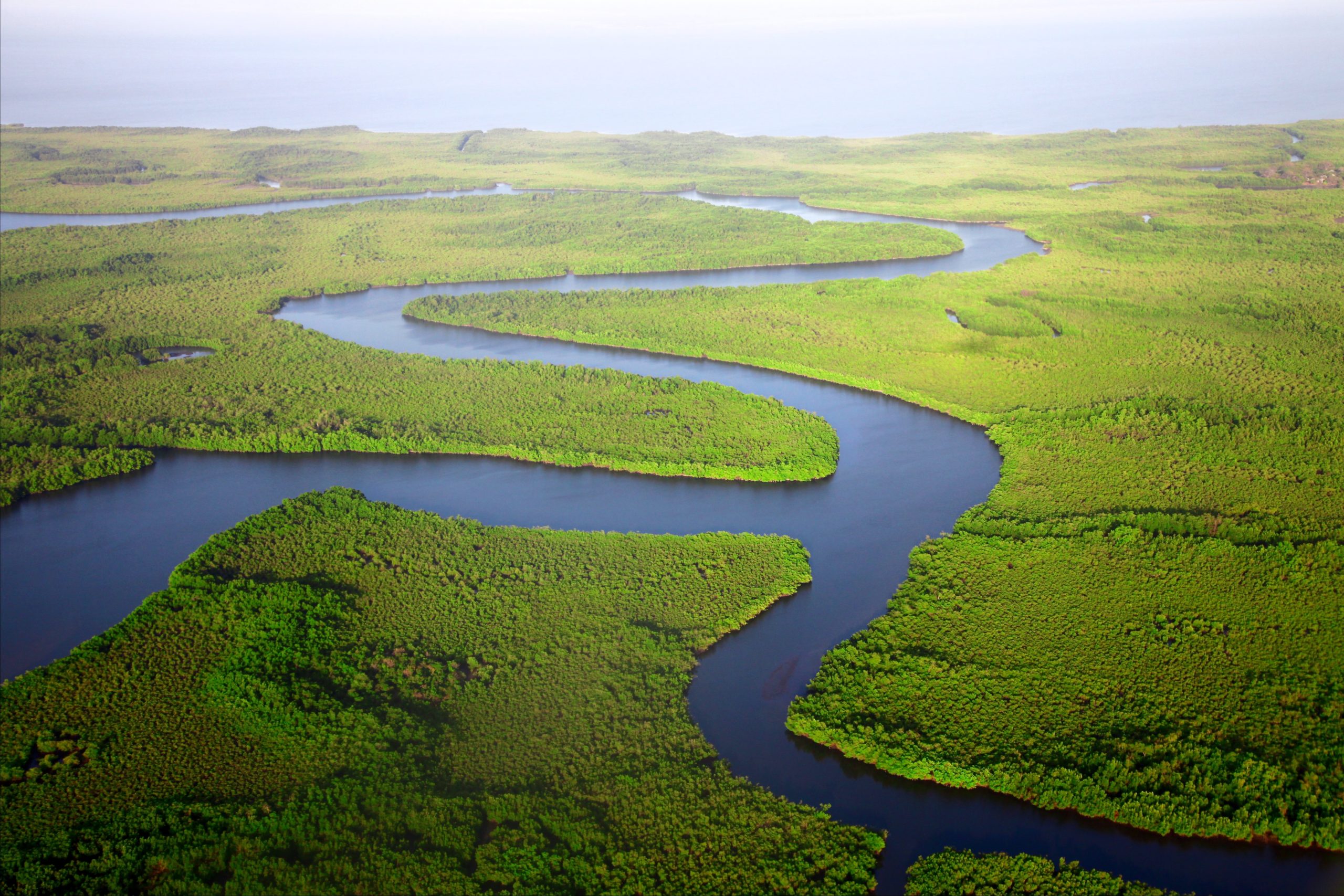
A photograph of virgin forests around a river in The Gambia - rivers important.

Why are rivers so important? And what are we doing to protect them?

“Rivers are integral to all life.”
That’s what Mark Angelo, the founder and Chair of World Rivers Day, has to say about our waterways. But why are rivers so important? And what are we doing to protect them?

Even though rivers account for just 2% of the world’s liquid surface freshwater, their impact goes well beyond the animals who live in them and the people who live by them. From vast fast-flowing waterways to shallow wetland deltas, rivers provide important ecological, economic and cultural value.

Throughout history, humans have harnessed their power to generate power, irrigate crops, expel waste and more. Pollution, industrial development, and climate change have placed immense pressure on our waterways, with many of the world’s rivers now in a degraded state.

According to the United Nations Environment Programme (UNEP):

  • 1 in 5 river basins have experienced fluctuations in surface water outside their natural range
  • Just 1 in 3 of the world’s longest rivers remain free flowing
  • 1 in 3 suffer from severe pathogenic pollution
  • 1 in 7 suffer from severe organic pollution
  • 1 in 10 suffer from severe salinity pollution
  • Every year about 1,500 tons of microplastics are estimated to escape from wastewater treatment plants into aquatic environments

It is vital that we protect rivers that remain in a healthy state, while striving to restore those that have been damaged in the past. But why exactly is it so important that we have healthy vibrant waterways?

1. RIVERS ARE A HOME TO BIODIVERSITY

According to the World Wide Fund for Nature (WWF), rivers are home to over 100,000 freshwater species. This means some of the most biodiverse habitats on our planet can be found around rivers.

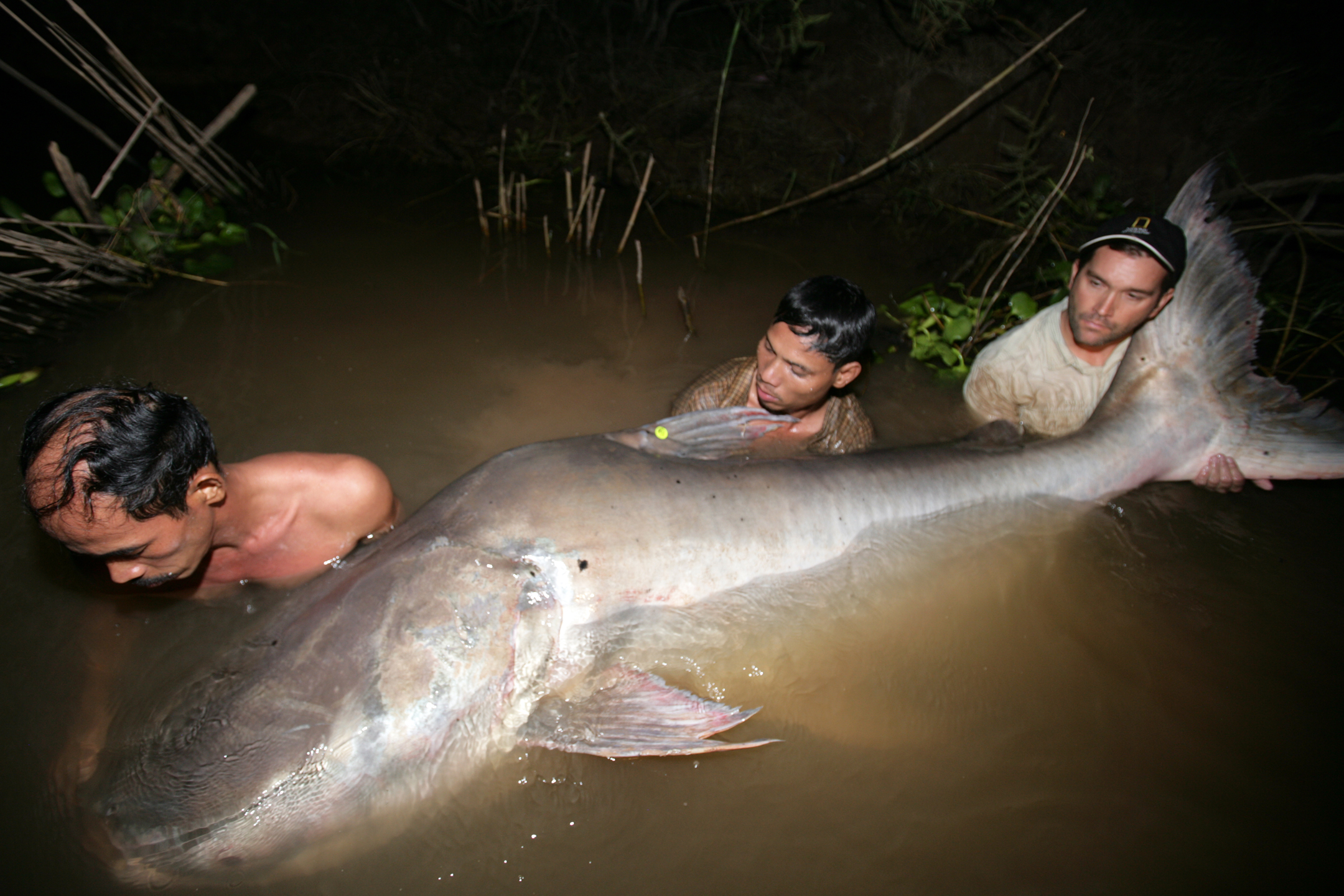
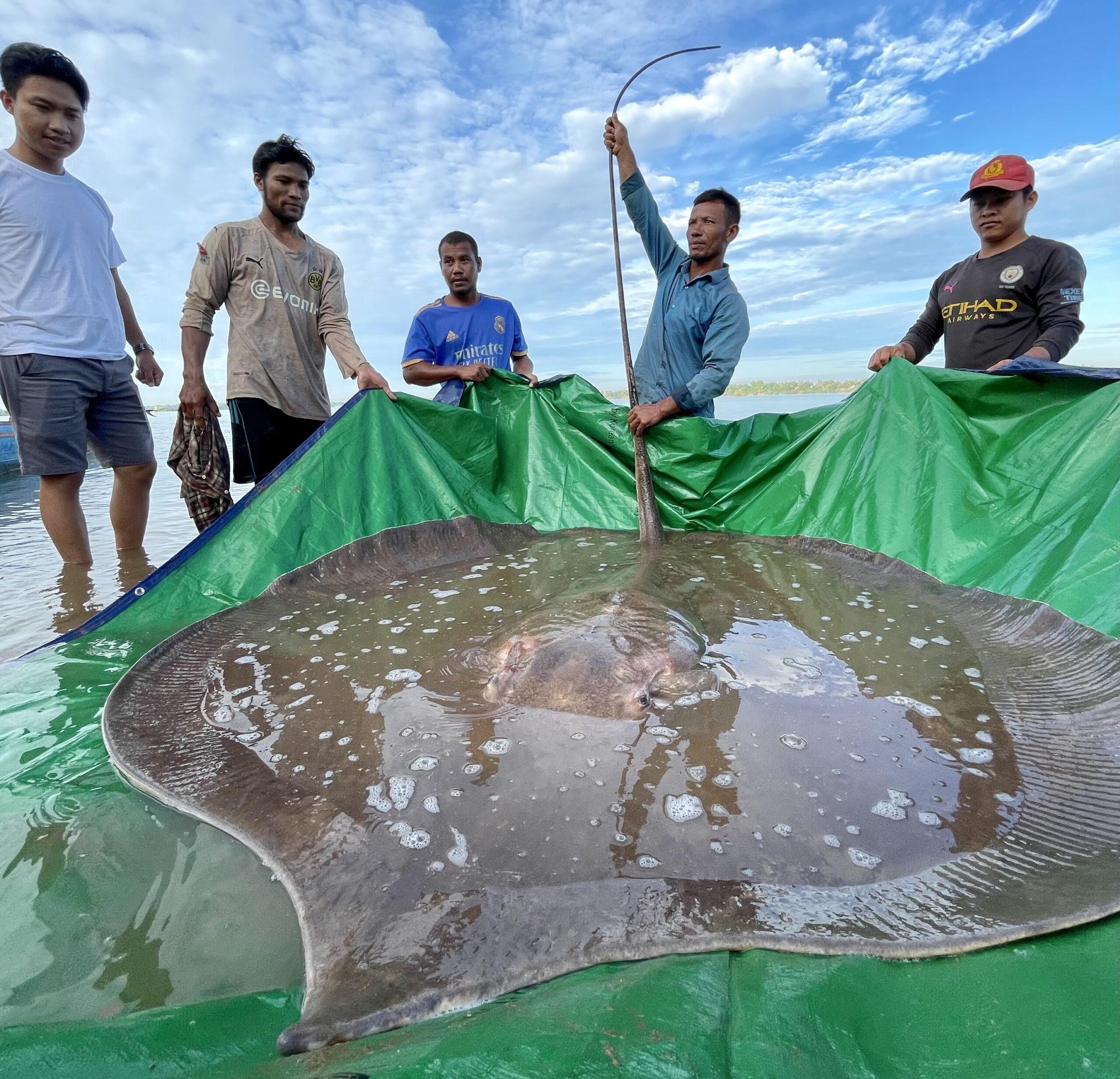
Critically they are home to many protected, endangered and threatened species including some of our Fantastic Freshwater species. For example the Indian skimmer, Mallacoota burrowing crayfish, Mekong giant catfish, and the Indus River dolphin.

The return of porpoises to the River Thames demonstrates how habitat restoration and river cleaning can see species populations bounce back.

A photograph of three men partially submerged holding a Mekong giant catfish - rivers important.
© Zeb Hogan

2. RIVERS ARE A HOME TO COMMUNITY

Humans have historically been drawn to rivers as a provider of transport, food and fresh drinking water. Many of the oldest cities in the world are built on their banks and a huge number of cultures and communities have developed around our waterways.-

The SHOAL team saw this first hand in Mexico, on our trip to witness Extinct in the Wild golden skiffia reintroduced to the Rio Teuchitlán.

SHOAL’s Michael Edmondstone said: “The local community has been integral to the skiffia and splitfin projects since the start, and will be key to ensuring the fishes’ habitat remains free of threats. A team of local children have volunteered as Guardians of the River, who pick up trash and speak with visitors to educate and inspire them about the importance of a healthy ecosystem. Walking around Teuchitlán, it is clear how important the project is to the community: colourful murals of the fish are painted on the side of buildings, and reminders to look after the river and its inhabitants adorn walls every couple of blocks. One reads, “every river is the heartbeat of the natural environment”. Another simply asks, “and what if you had to drink this water that you pollute?”

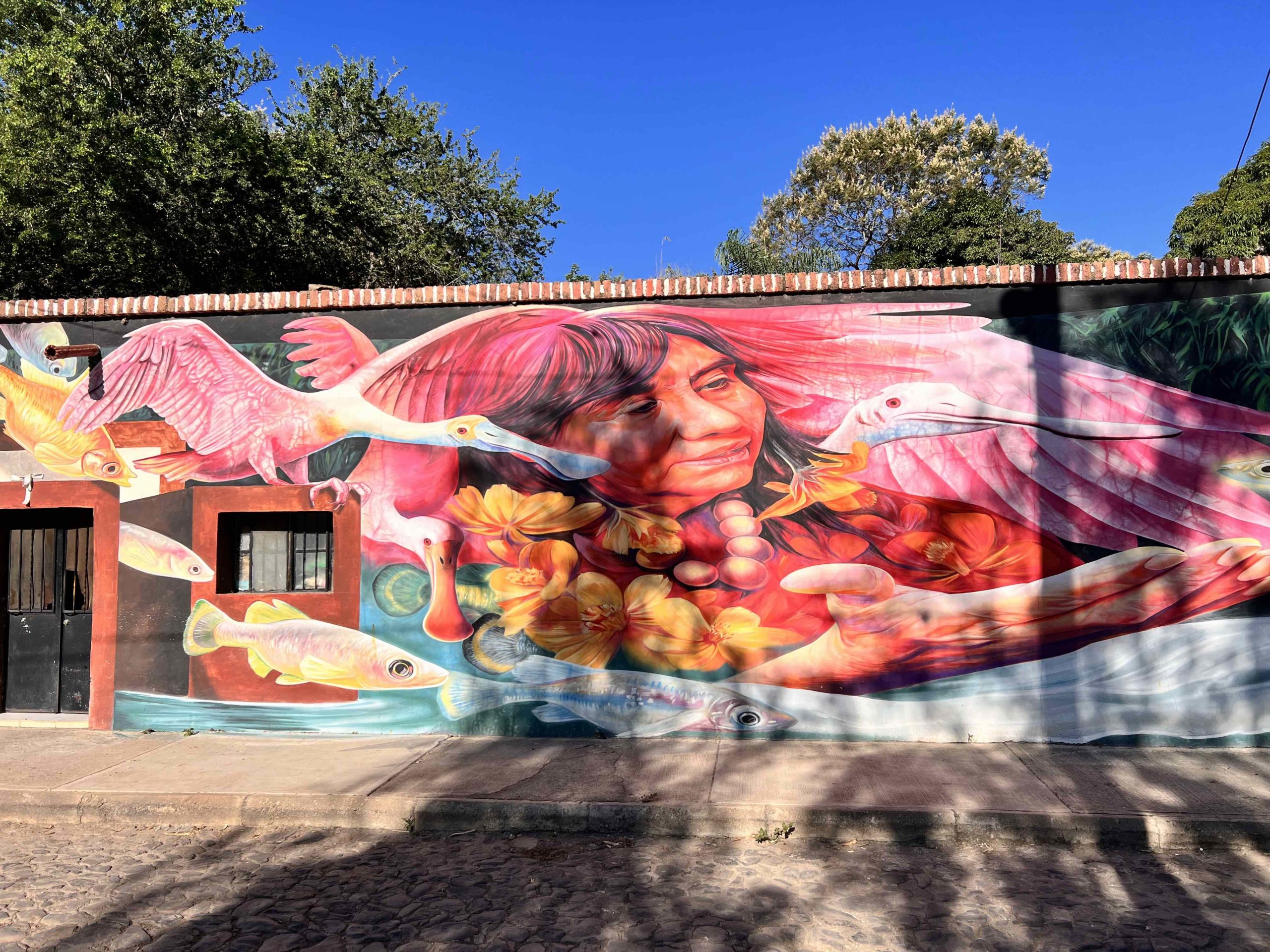
A colourful mural in Mexico taken during the expedition to return freshwater golden skiffia to the wild. A mural near the Teuchitlán River in Jalisco, Mexico, of Consuela, a local teacher and conservationist, and the golden skiffia. Rivers important.

3. RIVERS ARE VITAL TO PEOPLE’S LIVELIHOODS

The state of our waterways has a direct impact on people’s lives and livelihoods. Rivers support fisheries, transport goods and people, promote tourism, provide recreational and mental health benefits.

Threats to rivers that degrade their state, also damage the sustainable economic impact that local communities rely on.

9 reasons people need freshwater biodiversity

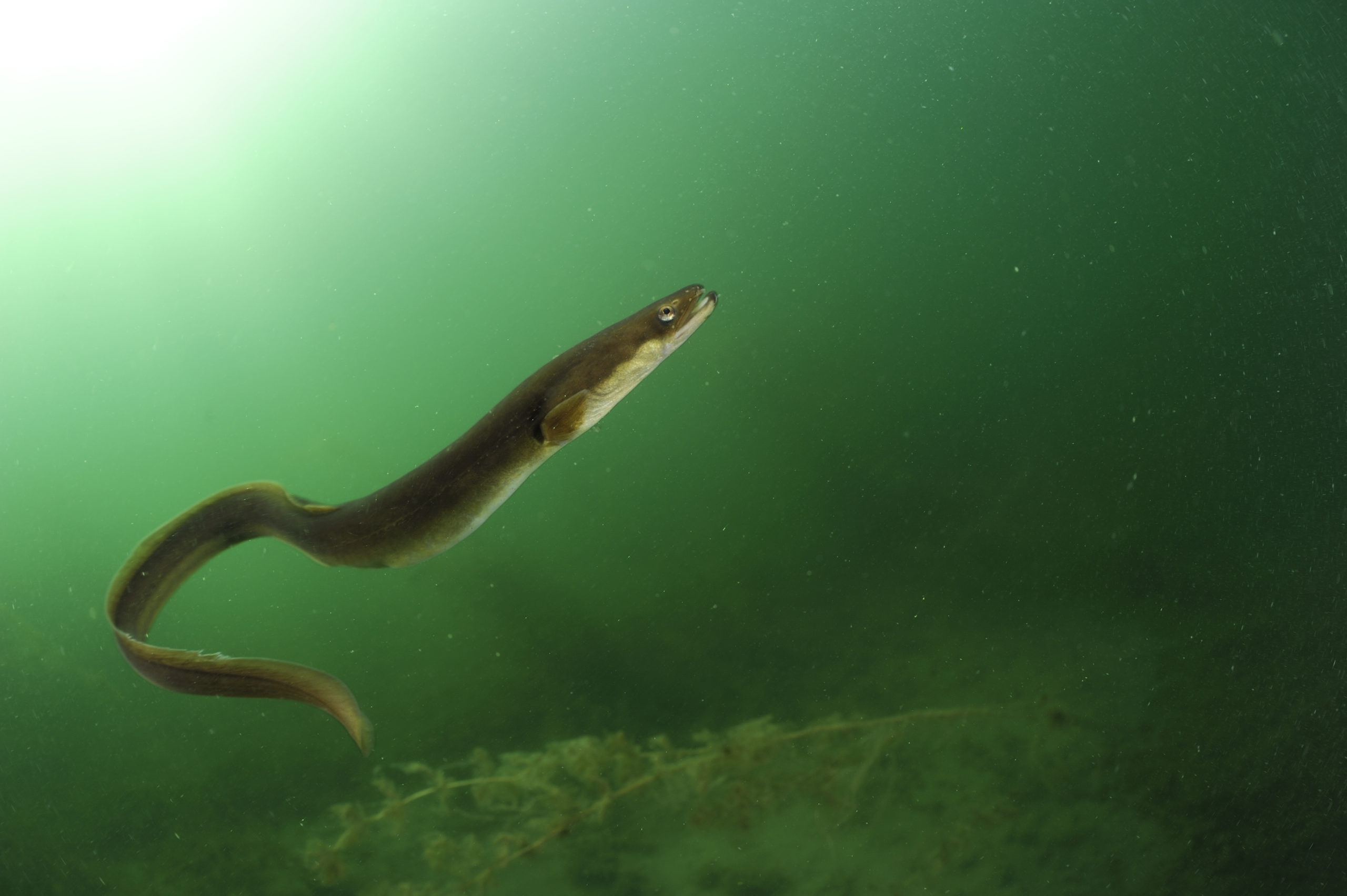
A photograph of a European eel in a paper about freshwater biodiversity.

In a new paper 22 scientists catalogue nine fundamental ecosystem services provided by freshwater biodiversity.

The following piece is based on a paper, released on 7th February 2023, by 22 scientists, including SHOAL Advisory Board members Ian Harrison, Rajeev Raghavan and David Tickner.

NATURAL BENEFITS

Freshwater biodiversity, from fish to frogs and microbes to macrophytes, provides people with a wide range of natural benefits. The accelerating pace of biodiversity loss and declining ecological function within freshwater ecosystems is the focus of mounting concerns.

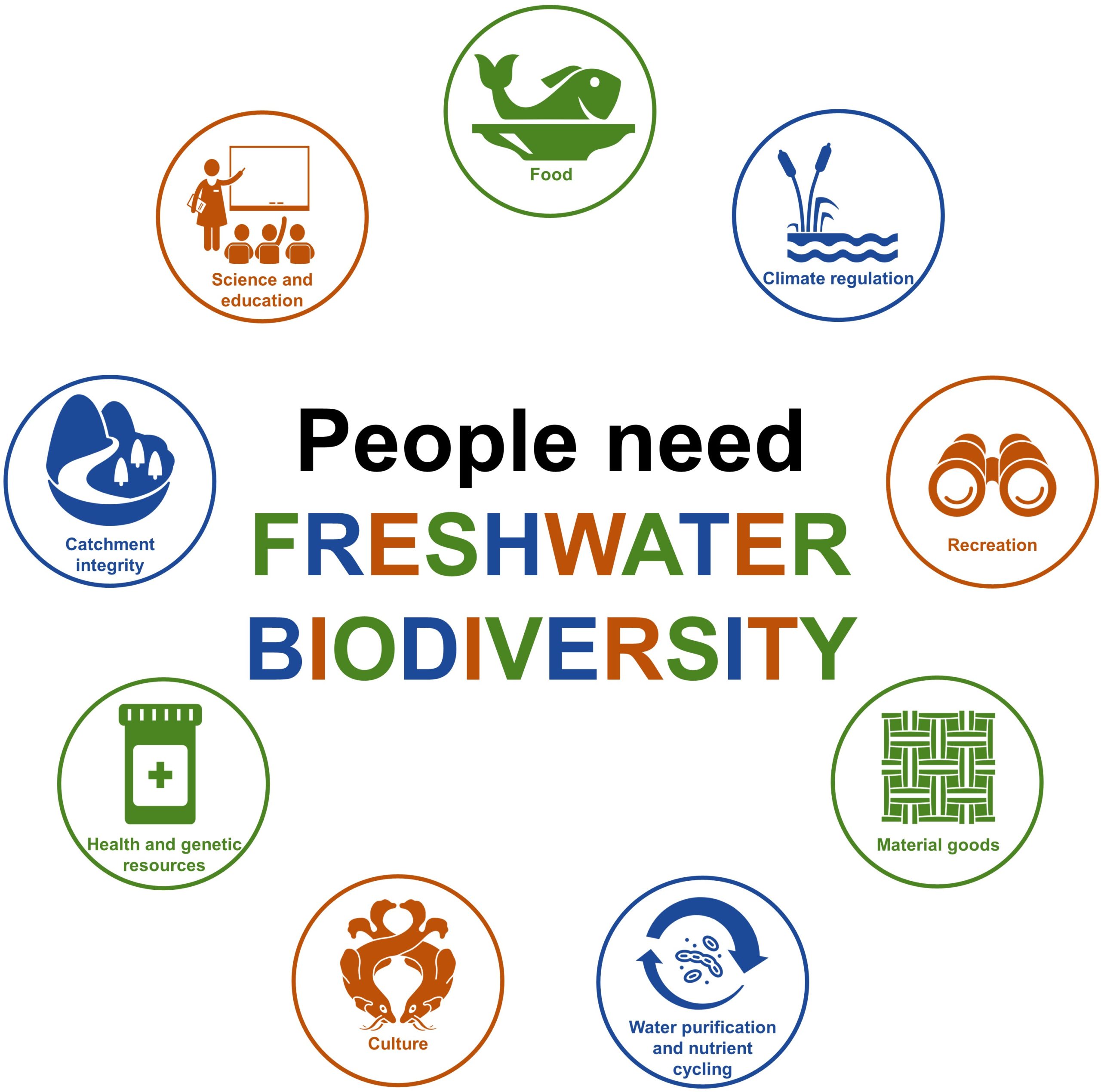
People Need Freshwater Biodiversity is a new paper from 22 scientists. This includes 3 SHOAL Advisory Board members – Ian Harrison, Rajeev Raghavan and David Tickner. The paper catalogues nine fundamental ecosystem services provided to people by the biotic components of indigenous freshwater biodiversity. These services are organised into three categories:

  • material: food; health and genetic resources; material goods
  • non-material: culture; education and science; recreation
  • regulating: catchment integrity; climate regulation; water purification and nutrient cycling

It is vital to protect, conserve and restore the biodiversity of freshwater, as well as inspire a broader appreciation of freshwater ecosystems. It is only then that the wide range of services provided will continue to contribute to human well-being and our sustainable future.

Read the full paper here→

GRAPHIC ABSTRACT

A graphical abstract of nine fundamental ecosystem services that the biotic components of indigenous freshwater biodiversity provide to people. Text in centre says "people need freshwater biodiversity". There are nine circles around the outside which have text and matching icons in. From the top, clockwise, they say: "Food", "Climate regulation", "Recreation", "Material goods", "Water purification and nutrient cycling", "culture", "health and genetic resources", "catchment integrity", and "science and education".

SHOAL Wrapped 2022 (freshwater highlights)

A colourful mural in Mexico taken during the expedition to return freshwater golden skiffia to the wild. A mural near the Teuchitlán River in Jalisco, Mexico, of Consuela, a local teacher and conservationist, and the golden skiffia. Rivers important.
SHOAL Wrapped is where freshwater fans get a deep dive into our most memorable moments of the year.
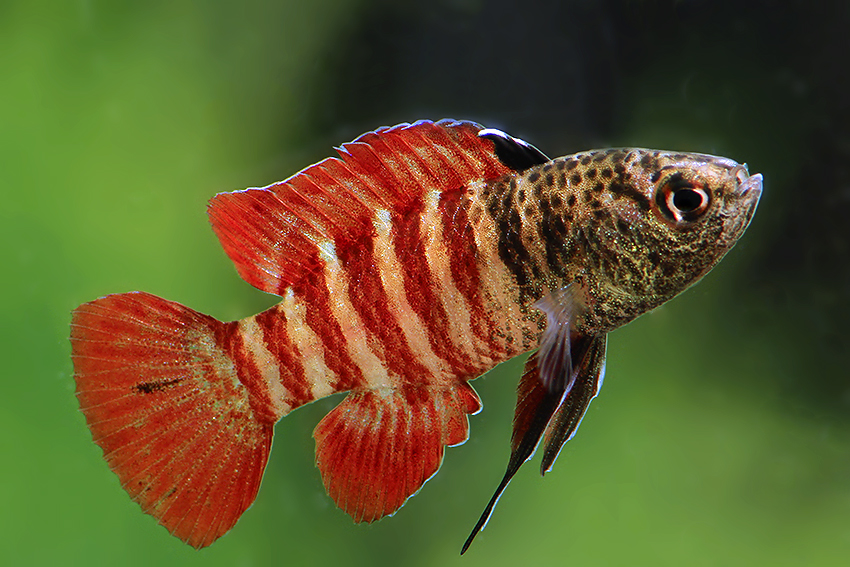
A photograph of a freshwater fish.
© Ken Maeda

New Species Report

In March we released the New Species Report 2021, which outlines 212 freshwater fish species described in 2021. Researchers and taxonomists from around the world contributed to the report, describing the species – striped and spotted, soft and spiky, bold and timid – in all their magnificent diversity.

The first of an annual series, New Species Report 2022 is already in the works. Keep your eyes peeled for the release in early 2023!

Find out more

A photograph of a group of people on the socio-historical fat catfish expedition in Colombia searching for the freshwater fish.

Hunt for the fat catfish

April saw the hunt for the elusive fat catfish begin. Ictiología y Cultura lead the socio-historical side of the search for one of the most compelling, and weird looking, of our 10 Most Wanted Lost Fishes.

The fieldwork uncovered some interesting new leads, including a fisherman who claimed he caught – and ate – the fatty fish a few years ago!
The search continues in 2023! As you read this, SHOAL’s partners are preparing to brave the cold climes of Lake Tota in the next few weeks for a scientific expedition in the region.

Find out more→

A photograph of the freshwater Bakara Sulawesi elephant snail.
© Thomas Von Rintelen

Fantastic Freshwater

In May, The Fantastic Freshwater report was released by some of the world’s leading conservationists. This landmark report highlights the diversity and beauty of freshwater species and the immense threats they face to their survival.

The report highlights 50 threatened species from the ten major taxonomic groups, along with the threats they face and the conservation action they currently receive, and brought together the expertise of more 70 scientists across 21 IUCN Species Survival Commission (SSC) Specialist Groups and Red List Authorities, laying the foundations for increased collaboration in the future.

Find out more

*The Fantastic Freshwater: 50 landmark species for conservation report is led by SHOAL, the IUCN SSC, the IUCN SSC Freshwater Conservation Committee, and the Global Center for Species Survival at the Indianapolis Zoo.

Illustrated logo for the Freshwater Inspire Network with a grey fish on a pink circle on a beige background.

The FIN

A three-day workshop in August saw the creation of the Freshwater Inspire Network, or FIN for short. This new initiative was developed at the INSPIRE meeting in Bristol, funded by WWF and Synchronicity Earth, with partners at Bristol Zoo.

“The workshop held at Bristol Zoo in May, funded by Synchronicity Earth and WWF, led to the creation of the Freshwater Inspire Network (the FIN), which will greatly simplify the collaboration between conservationists, creatives, campaigners, communicators and other collaborators which is so desperately needed to elevate and amplify communications about freshwater habitats and species.”

Mike Baltzer, Executive Director, SHOAL
The FIN has been created to help people who are passionate about freshwater conservation to connect and collaborate. From filmmakers to campaigners, conservationists to students, and more – the goal of the FIN is to help us make as much noise about freshwater as we can!

Find out more→

A photograph of two freshwater fish.
© Wildlife Reserves Singapore

ASAP Action Plan

The ASAP action plan is a collaboration between SHOAL, Mandai Nature and the IUCN SSC Asian Species Action Partnership (ASAP) to draw up an action plan to save the most threatened freshwater fishes in Asia.

Find out more→

Our new partner Progres

In July, we announced our newest partner: Progres, a conservation NGO co-founded by two Sulawesi women, Sheherazade and Asnim Alyoihana Lanusi.

The organisation is based near Lake Poso, where they work closely with local fishermen in an attempt to find three ‘lost fishes’, including the duck-billed buntingi from our 10 Most Wanted Lost Fishes.

Find out more→

A photo of SHOAL’s Michael Edmondstone dressed as the freshwater Attenborough’s killifish at the start of the London Marathon.

London Marathon

October saw SHOAL break the record for fastest marathon ever run by a killifish (we assume). Our Communications and Engagement Lead Michael Edmondstone ran the London Marathon dressed as the Attenborough‘s killifish in support of Synchronicity Earth’s Keep Them In The Running campaign.

The £1,600 raised will be put directly to a killifish conservation project in Africa’s Rift Valley Lakes, which will help bring more species back from the brink.

Find out more→

A photograph of a man with a net in a freshwater peat swamp forest in Southeast Asia.
© Parosphromenus Project

Expedition to Southeast Asia

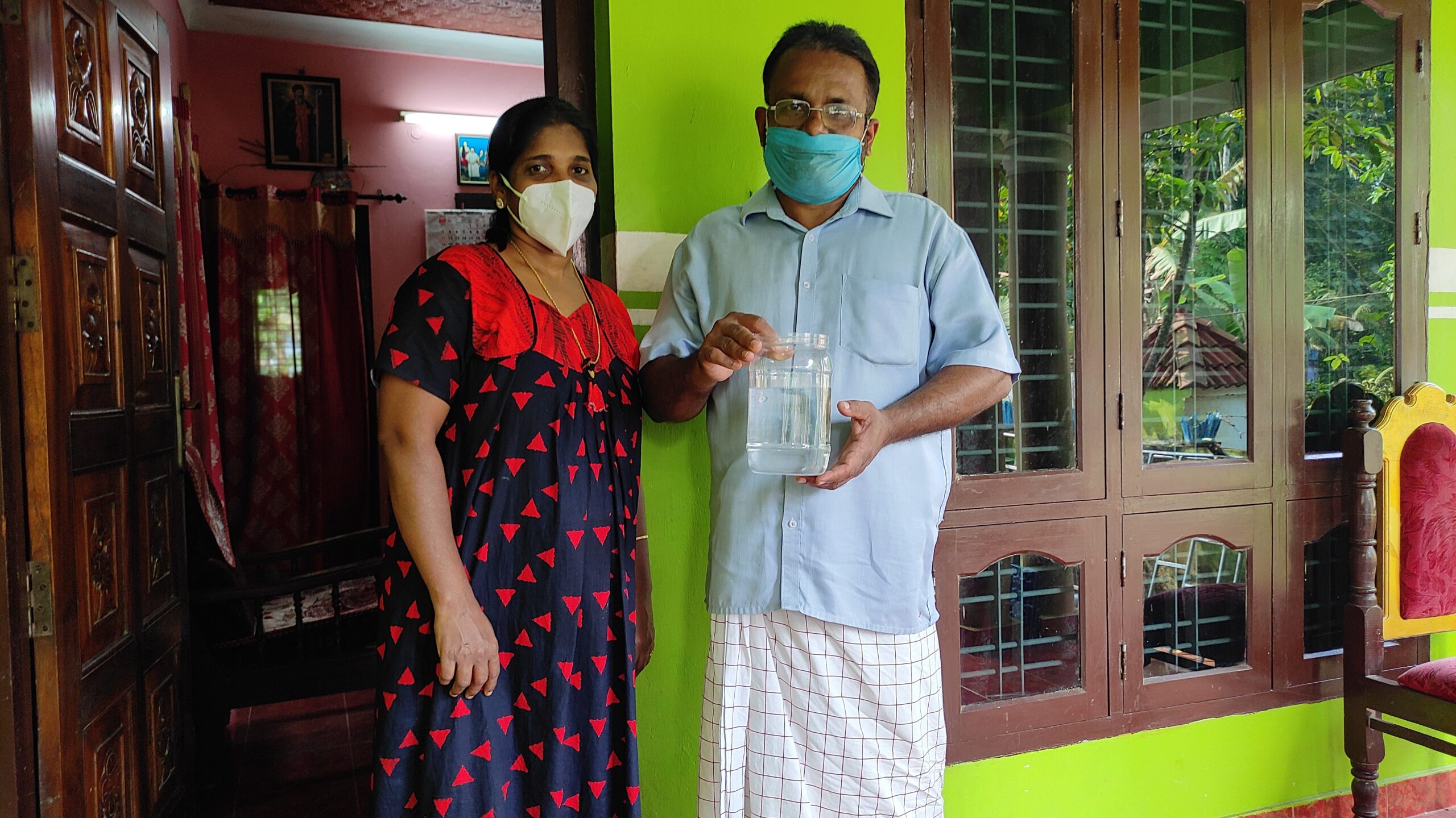
In October, SHOAL Executive Director Mike Baltzer and Synchronicity Earth programme officer Félix Feider travelled to Southeast Asia to meet partners and plan future conservation work.

A highlight was a boat trip through the peat swamp forests of Pahang with partners the Global Environment Centre.

“It was wonderful to meet the partners and the local communities working at the frontline to save some of Southeast Asia’s most important freshwater fishes and their habitats. Each of the projects exemplifies what can be achieved by locally-led direct conservation action and SHOAL is proud to be part of it.”

Mike Baltzer, Executive Director, SHOAL
Find out more→

Save Denise’s Friends

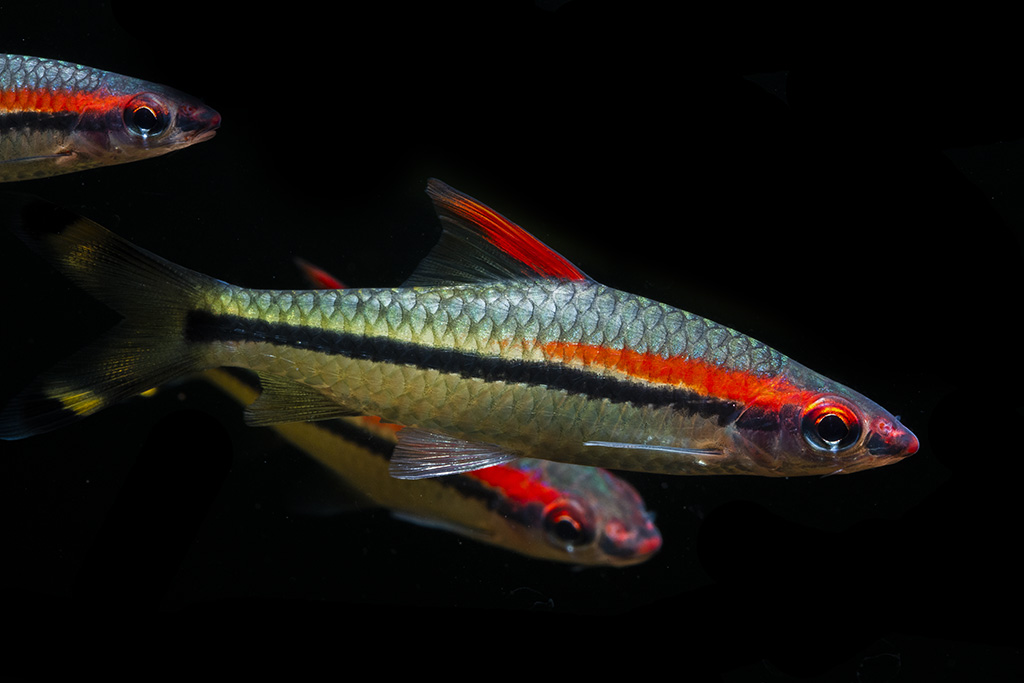
At the end of 2021 we launched our Save Denise’s Friends campaign, in partnership with OATA and Practical Fishkeeping magazine. The Denison’s barb is one of the world’s most popular home aquarium fish, but in a few short years could become Extinct in the Wild.

In October we released three short films with our partners Zoo Outreach, a species conservation NGO based in India. The first is about the Endangered barb in the wild, the second focuses on the barb in the aquarium trade, and the third explores what the future could look like for the species.

Find out more→

A photo of a shoal of freshwater fish golden skiffia in a clear perspex box partially submerged.
© Manfred Meiners

Trip to Mexico

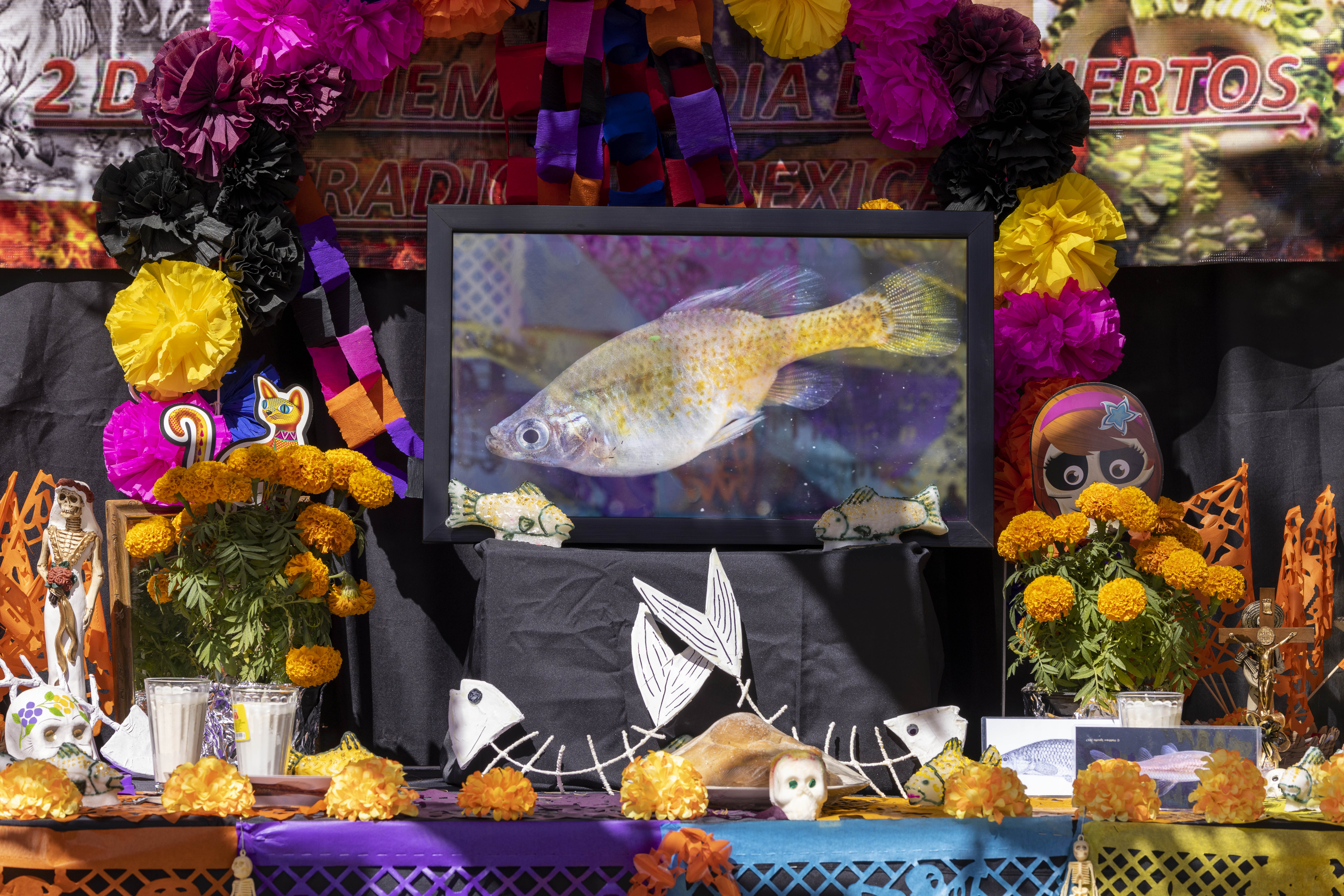
On November 4th 2022 a team from the University of Michoacan, Mexico, reintroduced over 1,000 golden skiffia into the Rio Teuchitlán. The team was led by Omar Domínguez-Domínguez, and the Goodeid Working Group, with vital support from Chester Zoo.

A couple of weeks earlier the SHOAL team packed their bags for Mexico to participate in a four-day workshop to establish an action plan for conserving the highly threatened Mexican goodeids group of fishes.

Extinct in the Wild for 28 years, this was a (fresh)watershed moment so huge it even captured the attention of Hollywood superstar Leonardo DiCaprio.

“The four day workshop to plan the conservation of Mexican goodeids was intensive and productive, with an ambitious and effective plan of action established, and a strong team created. We are now in an excellent position to drive forward the conservation of more than 40 endemic and highly threatened species by 2030. All the team needs now is the funding.”

Mike Baltzer, Executive Director, SHOAL
Find out more→

COP15

In December a film made by SHOAL, along with our partners Synchronicity Earth and The Nature Conservancy, premiered at the Nature Positive Pavilion at
COP15.

Indigenous peoples around the world have called on policymakers to take the steps needed to save our freshwater ecosystems: “Protect inland waters!”

Find out more→

If you want to support the work SHOAL are doing to conserve freshwater species through action-driven conservation donate here. Don’t forget to subscribe to our newsletter The Stream to get all the latest freshwater news straight to your inbox.

We can bring the Denison’s barb back from the brink (film)

Photograph of a shoal of Denison’s barb fish in freshwater.

Credit: Beta M

Watch our film to see how together we can stop the Denison's barb from going extinct in the wild.

Meet the Denison’s barb

The Denison’s barb is one of the world’s most popular home aquarium fish, and can be found in living rooms from California to Kolkata.

Their striking colours and peaceful nature have put them in high demand for both beginners and expert fishkeepers. But it’s not their popularity that has led to wild populations becoming endangered.

What threats are they facing?

Sand-mining and pollution are causing damage to the fish’s habitat in India’s Western Ghats. The species’ home is under threat.

If we don’t take urgent action to protect and restore the damaged areas, this striking fish could go extinct in the wild in just a few years.

We need your help.

Illustration of damage to the Denison’s barb’s freshwater habitat in the Western Ghats, India.
Credit: Usha Ravindra

What can we do to help?

With your support, SHOAL and our partners Zoo Outreach, can help bring the Denison’s barb back from the brink.

We can raise awareness with the public and government officials in India
We can train staff in five airports to recognise the species and monitor the number of fishes leaving for export
We can protect the most crucial habitats, providing security, not just for the barb, but for the many other rare and threatened fishes that live in the area

Together we can make a difference.

Every single donation will help give the species a better shot at survival. Donate today at shoalconservation.org.

This film has been created for our Save Denise’s Friends campaign, in support of the Denison’s barb. The campaign is part of SOS: Support Our SHOAL, an innovative approach to freshwater conservation led in partnership with the aquarium hobby and guidance from OATA and Practical Fishkeeping.

SOS: Support our SHOAL empowers individuals and businesses from the aquarist community who want to know how they can help ensure the futures of the species they love. We have loads of resources on our website for everyone from aquarium shops to hobbyists.

Running for species running out of time

Keep them in the running marathon fundraising

Keep them in the running marathon fundraising

Staff member Michael Edmondstone will be running the London Marathon dressed as an overlooked and underfunded species. But which one? You decide.

by Michael Edmondstone

In early July, Victoria, Synchronicity Earth’s Head of Relationships & Operations, told me there was a London Marathon place available through the organisation, and would I like to take it? I’ve been lucky enough to run the London Marathon twice before and both times were such positive, energising experiences. Tens of thousands of runners pounding the pavement and raising money for charity, with scores of boisterous supporters cheering and clapping, creates this incredibly uplifting atmosphere. You can’t help but be swept up in the joy of it all! I took the place without thinking twice.

There was no obligation, Victoria told me, to raise funds for the charity. Somebody else was originally due to run for Synchronicity Earth but had to pull out due to unforeseen circumstances, and their place had become available without strings attached. But what an opportunity to help draw attention to overlooked and underfunded species! People dress as rhinos, pandas, trees – even the globe – to draw attention to conservation, so surely I could run as one of the species supported either by Synchronicity Earth or SHOAL.

To make it even more fun, we decided to let the public choose the species from a shortlist of three threatened species: the Critically Endangered rufous-headed hornbill, the Endangered Copan brook frog, and the Vulnerable Attenborough’s killifish.

Rufous-headed Hornbill
Rufous-headed hornbill © Pierre de Chabannes
Copan brook frog © Robin Moore
Attenborough's killifish © Béla Nagy
Attenborough’s killifish © Béla Nagy

Attenborough’s killifish

Being the SHOAL guy, it’s natural I’m hoping the killifish gets picked. Here’s why:

As visitors to this website know, the global biodiversity crisis is most pronounced in the planet’s freshwaters. Freshwater ecosystems have an extinction rate four to six times higher than marine or terrestrial environments, and there has been a staggering 84% decline in freshwater population size since 1970. One in three freshwater fish are threatened with extinction, yet they still don’t receive anywhere near the same levels of funding or attention as creatures from the land or sea. This desperately needs to change if they are to have a good shot at survival, and this campaign can help put some much needed focus on the situation.

And killifish are remarkable! Certain species live in rainy pools formed by elephants’ footprints. The leathery egg casings prevent the egg from drying out for many months or even years, and when the rains finally arrive, the fish hatch into whatever pool the rains have formed –including elephants’ footprints!

Attenborough’s killifish, named after Sir David Attenborough, is a stunning crimson and turquoise fish endemic to pools and marshes that drain into the east side of Tanzania’s Lake Victoria. It is threatened by development, agriculture and aquaculture and is a stunning symbol of how freshwater fish need much more attention if they are going to survive the many anthropogenic pressures put on them.

Rufous-headed hornbill

Of course, when I asked my Synchronicity Earth colleagues which species I should pick , their suggestions were mainly based on which animals would look most spectacular and absurd to run the London Marathon dressed as.

With their large ‘casque’ or horn making their bright red bills made even more noticeable, fire-coloured necks and glossy black plumage, the rufous-headed hornbill, or talarak, was an eye-catching choice. The species is the flagship of Synchronicity Earth’s partner the Talarak Foundation.

It is thought to be one of the rarest hornbills in the world and has already disappeared from one of the islands it was once thought to inhabit (Guimaras), and survives only now on Negros and Panay. As a Critically Endangered species, it is more vulnerable to extinction than the Attenborough’s killifish or Copan brook frog, mainly due to chronic deforestation. Only three per cent of Negros and six per cent of Panay remains forested, but that data is from 2007 so it is likely to be even less today.

However, the Talarak Foundation have been able to successfully breed rufous-headed hornbills in captivity (no easy task, due to their complex nesting requirements) which may one day lead to a release of captive-bred individuals to strengthen wild populations.

Copan brook frog

This list would not properly represent Synchronicity Earth if there was not an amphibian option. Actually, there are so many spectacular amphibian species in the Amphibian Programme, it was hard to choose!

But in the end, we have gone for a frog with dazzling ruby-red eyes and lime-green leopard print. After all, what is the point in doing this if I haven’t given myself a ridiculous costuming challenge…

Like the two other species, one of the greatest conservation challenges for the Copan brook frog is that it has a highly limited geographic range. This gem of a species lives in northeastern Guatemala and northwestern Honduras, and one of the few mountain ranges it is found on is called Sierra de Caral, where our partner Foundation for Ecodevelopment and Conservation (FUNDAECO) established an amphibian reserve, La Firmeza Amphibian Reserve.

Just like many hundreds of other amphibian species around the world, the Copan brook frog has been affected by the amphibian pandemic chytridiomycosis, caused by a fungus which targets the skin of frogs, toads, and other amphibians, and leads to their death. The other key threats are loss of habitat and water pollution, which is why the work of organisations such as FUNDAECO, in hand with local communities, to keep amphibian strongholds such as La Firmeza safe, is so important.

Time to make a decision

So what do you think? Should I run dressed as the Killifish, the Hornbill or the Frog? Each of them could have wonderful, colourful costumes that will hopefully draw plenty of attention on marathon day and help raise awareness of overlooked and underfunded species. Which one should it be? Head over to the Synchronicity Earth website to cast your vote!

Introducing new partner: PROGRES

progres logo

PROGRES Sulawesi: Introducing SHOAL’s newest partner

SHOAL is excited to announce our new partners in Sulawesi, Indonesia: PROGRES (Sulawesi Regional Ecological Conservation Initiative). PROGRES is a conservation NGO that harnesses the power of local communities and science to save endangered yet overlooked species. Each of the organisation’s wildlife programmes focuses on the following components to create the best possible chances of success: wildlife research and conservation, capacity building, community engagement, and educational activities.

PROGRES will be working with the Asian Species Action Partnership as our partners in the Lake Poso region of Sulawesi and will focus their Fish Programme on searching for three Critically Endangered fish that are endemic to the lake. The duck-billed bunting is one of the Top 10 Most Wanted Lost Fishes and hasn’t been seen since 1983. The Rosen’s buntingi and Poso bungu were both last seen in 1978. It is thought that volcanic and tectonic activities that occurred in the region in 1983 may be responsible for the population of each of the species to crash, and the decline of each has also been linked to invasive species and their parasites and diseases (Parenti and Soeroto 2004).

Chilo and Asnim visiting local to ask about fish
Chilo and Asnim visiting local to ask about fish © PROGRES

As part of this programme, the PROGRES team have been surveying villages around Lake Poso, interviewing fishermen to understand their fishing practices, and joining them fishing to learn their techniques. Speaking with PROGRES‘ co-executive directors Asnim Alyoihana Lanusi and Sheherazade, and fish programme coordinator Efran ‘Chilo’ Toau, it became clear that the fishing practices needed to catch these Critically Endangered fish are very technical. As only 16 fishermen from the lake, from only 6 of the 21 Poso villages, still use the techniques, there is hope that the species haven’t been seen simply because they’re not likely to be caught. The fishermen using this technique catch ‘rono’ fish – a popular delicacy in the region.

According to Chilo the technique involves the use of a lamp on the boat, “which is placed in the middle of the lake in the middle of the night, when it is very dark. The technique doesn’t work if the moon is very bright. The fish follow the light, and the fishermen guide the boat very slowly to the edge of the lake – it can take 4 or 5 hours – where the rono are caught in nets that have already been placed”.

The need for total darkness means that increased urbanisation around the lake has made catching the rono more difficult.

It can take a whole year to learn the skills needed to catch these fish, so many of the fishers in the local villages catch carp or tilapia instead, even though the rono are more profitable.

From PROGRES’ conversations with villagers and fishers, they have found older generations remember the three Critically Endangered species, but not since the 1980s. But optimism is important in conservation, and there could be a good reason for the species not being seen: aside from the technical methods needed to catch them, the three Critically Endangered species are larger than the rono species that are fished for food. There is every reason to believe the two buntingi species and the Poso bungu inhabit different, potentially deeper parts of the lake where the fishers’ nets don’t reach.

Populations are likely to be small, but there is hope for the species.

Preparing to catch rono
Preparing to catch rono © PROGRES
Catching rono
Catching rono © PROGRES

An important aspect of PROGRES’ work is their community involvement and educational activities. Sheherazade explained that this involves four strands: “First is the capacity building for the youth in Poso: we train them to do the fish surveys so that they can be the fish champions in the long term. Secondly is the training and engagement with the rono fishermen, so that they can do fish examinations on their own. Thirdly, we will run an outreach campaign with the local children, so they understand that these fish species were once present in the lake. Finally, through our research, we expect to provide key scientific information to support the Lake Poso protection by other stakeholders”.

Sheherazade
Sheherazade © PROGRES
Chilo
Chilo © PROGRES
Asnim Alyoihana Lanusi
Asnim Alyoihana Lanusi © PROGRES

Chilo added that the response to this community work has been varied. Older generations that have seen – and tasted – the Critically Endangered fish are sad that the species may be extinct, and they support the programme fully. The younger generation are not so responsive just yet, as they’ve never seen the fish in their lifetimes. “But,” says Asnim, “this can be an opportunity: when we ask the young people to join us on the fish surveys, they do so, saying ‘This will be fun!’ Through our work, you can see the change in people’s attitudes to the wildlife in the lake – they start to understand why conservation matters”.

Lake Poso
Lake Poso © PROGRES
Chilo joining fisherman
Chilo with fisherman © PROGRES

PROGRES’ mission – to save endangered, yet overlooked, species – aligns seamlessly with SHOAL’s goal of halting extinctions in the most threatened freshwater species, which are often overlooked in conservation, making the organisation an ideal partner. When asked why she decided to co-found PROGRES with Sheherazade, Asnim said, “In Indonesia, conservation has been focused on targeting big mammals and protected areas, and within Sulawesi itself, conservation has been focused in the northern part of the island targeting a few conservation areas. All these initiatives are led by foreign or international big NGOs. Other species outside conservation areas have been left out, and that’s where PROGRES would like to contribute. These species have not received conservation attention, despite their threatened status, so through PROGRES we initiate locally-led conservation to study and protect them.

“We also want to show that local, Sulawesi natives, and women like Sheherazade and myself are capable of leading a conservation NGO and to lead with compassion, combining science and a community-based approach to conservation. Because we are from Sulawesi, we understand the cultural and local context, so our actions are more suitable. We are also passionate about enhancing the capacity of more Sulawesi natives to be conservationists”.

It is wonderful for SHOAL to be working with such a dynamic, forward-thinking team as PROGRES, and look forward to what we will achieve together!

Checking Adrianchthys fish with local fisherman1
Checking Adrianichthys fish with local fishmerman © PROGRES

Fat catfish socio-historial expedition

Fat catfish specimen

Fat catfish specimen

The socio-historical team have completed their expedition to Lake Tota in the mountains northwest of Bogota, Colombia, and have submitted reports that shine some light on the mysterious fat catfish. They explore whether an earthquake could have extirpated the species, whether there could be reference to the fish in the design of pre-Colombian Muiscan jewellery, and even whether the fish wasn’t from Lake Tota at all, but from a different lake more than 100km west of Lake Tota. A handful of villagers local to the lake tell the team stories of how they’ve seen – and, in one case, even eaten – the fish.

No potential leads are left unexplored in Ictiología y Cultura’s thorough research. And, although their work poses more questions than answers, their conclusion is that the fat catfish may well still be alive and swimming, somewhere in those cold highland waters.

Watch the video below to get an insight into Ictiología y Cultura’s work. There’s even a song about the fat catfish – we dare you to watch it without smiling!