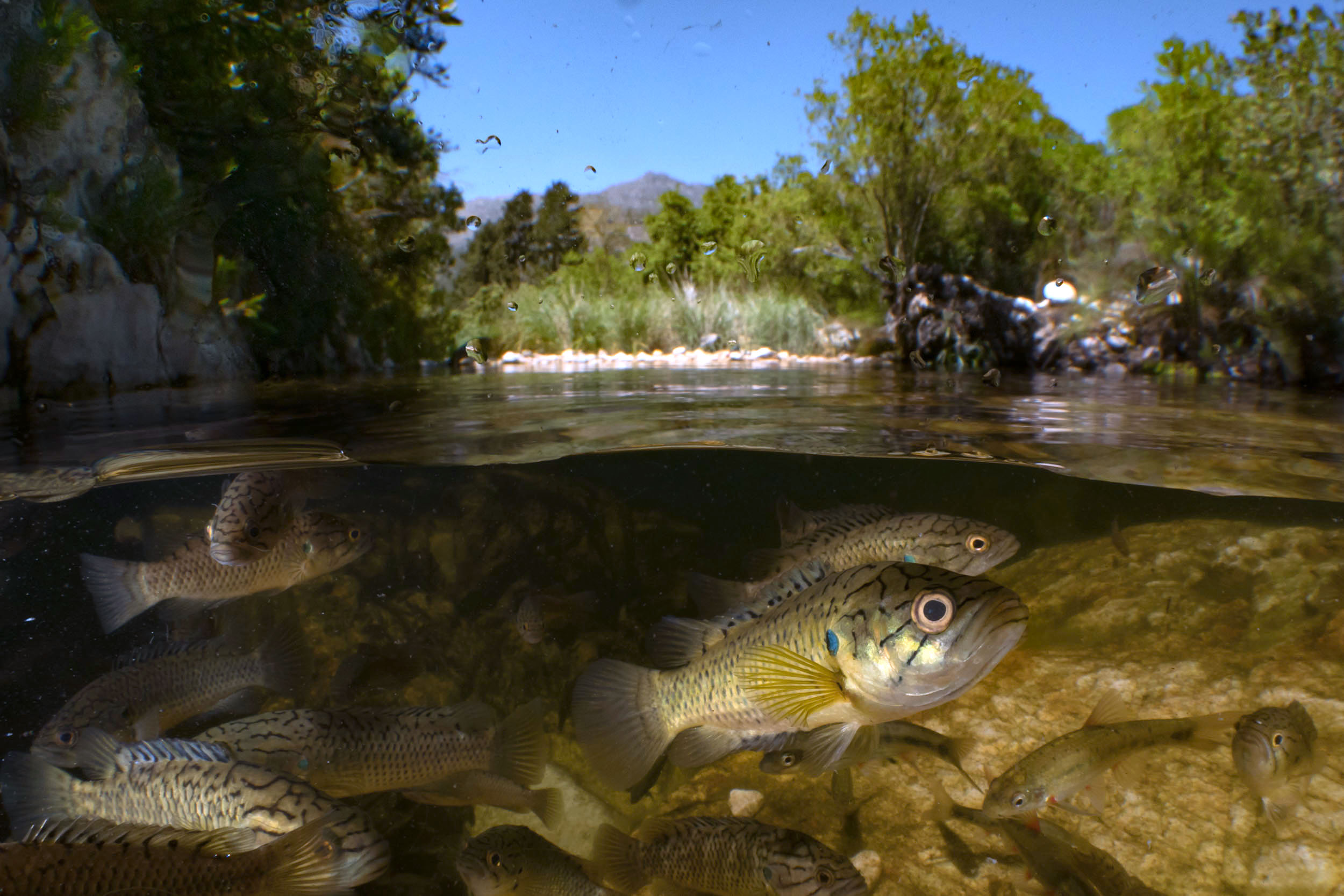
Black Mudfish Rediscovered in New Zealand Wetlands

Black Mudfish © Auckland Council

Black Mudfish © Auckland Council

CELEBRATING THE ORGANISATIONS DOING WONDERFUL WORK IN THE WORLD OF FRESHWATER SPECIES CONSERVATION


GUEST POST:

MATT BLOXHAM, AUCKLAND COUNCIL


The Black Mudfish, not seen since 2014, was discovered alive and well in two New Zealand wetlands in November 2025. Matt Bloxham, Auckland Council’s senior regional freshwater advisor, tells us all.


A little-known native freshwater fish, the elusive Black Mudfish (Neochanna diversus), has been discovered in two wetlands on Auckland, New Zealand’s west coast.

Auckland Council’s Senior Regional Advisor (Freshwater), Matt Bloxham, says the first discovery was in a wetland where mudfish hadn’t been seen for many years and were thought lost. This exciting rediscovery prompted a wider search, and a second entirely ‘new’ population was found within two months of the first.

The finds are significant because black mudfish have a ‘Threatened – Regionally Critical’ conservation status in Auckland. There are just six known populations in the entire region.

Black Mudfish © Matt Bloxham

Matt says, “neither of the wetlands stood out initially as containing useful mudfish habitat. The secluded, well shaded pockets of standing water found beneath ancient swamp forests and which are coveted by mudfish have, in these wetlands, given way to choking emergent vegetation.”

“As a result, the number of individuals found was tiny relative to the wetlands’ overall size. In one wetland, mudfish were found in only a single trap. However, where failing juvenile recruitment so often presages the decline of rare fish populations, juveniles were found in both sites, suggesting breeding is occurring”, says Matt.”

The Black Mudfish is one of New Zealand’s most unusual and resilient freshwater fish species. The outward appearance of these small, eel-like creatures is muted, and not in the slightest bit flashy. However, their tubular form and jaunty fins pushed right back along their body and stacked neatly around their tail, are exquisitely honed for threading into wetland sediments and vegetation as surface water subsides in summer. At such times mudfish can respire through their skin, slow their metabolism and endure extended periods without water until rain returns,” says Matt.

“This gives mudfish an advantage over would-be competitors. Juvenile eels that manage to reach these secluded, temporary pools are forced to vacate before they grow large enough to predate resident mudfish. Consequently, most mudfish populations tend to be in wetlands that lose their surface water for a period,” adds Matt.

Mudfish complete their entire lifecycle within wetlands; never heading to sea like most native New Zealand freshwater fish species. That also makes them vulnerable; if their wetland habitat is degraded or lost, entire populations can disappear with it. Auckland has already lost 97 per cent of its original freshwater wetland area.

The discovery adds to a decade-long programme to protect Black Mudfish, which began in 2014. Since then, council staff have found new populations, rediscovered old ones, and worked with Auckland Zoo to explore captive breeding and rewilding opportunities. The goal is to establish self-sustaining wild mudfish populations that can withstand regional threats like land-use change and climate change induced drought.

“This tiny fish may be secretive, but its survival depends on us noticing it, protecting and carefully managing its wetland habitats. Mudfish are cryptic, but they’re also unpredictable and seldom found reliably in the same locations, which unfortunately makes them hard to find and monitor. Securing a network of small, shaded and secluded wetland pools for mudfish, is part of the solution” says Matt.

These discoveries provide hope and a clear pathway for restoration and management. “When new populations are found, [the] Council works closely with landowners to control invasive weeds and predators, restore wetland buffers, and where necessary, restore a wetland’s hydrology,” says Matt.  Shade is also crucial for preventing the pools from drying out, keeping fish cool during Auckland’s warmer months.

The Black Mudfish may be small, but its story is mighty, a reminder that even the quietest corners of our wetlands can hold extraordinary surprises. The discovery has also sparked fresh hope and has shown that there’s value in searching nearby wetland fragments. The search continues.

Cichlid species, previously ‘lost’ to science rediscovered in Lake Victoria!

Lipochromis microdon

Lipochromis microdon

Guest author: Anna Mahulu

Lipochromis microdon is a species of cichlid endemic to Lake Victoria. It hasn’t been formally recorded since 1985 and for decades, it was thought to be lost or possibly extinct as a victim of the dramatic ecological changes in Lake Victoria. Like many other haplochromine cichlids, and fish larvae eaters specifically, this species faced immense pressure from habitat degradation and the arrival of invasive species. However, in a surprising turn of events, recent sampling efforts have confirmed that Lipochromis microdon is still alive, offering a glimmer of hope for its conservation.

A Species Once Thought extinct

Originally described as Haplochromis microdon, this species was later placed in the genus Lipochromis when Peter Humphrey Greenwood revised the systematics of haplochromine cichlids in 1979/1980. Lipochromis is a genus of cichlids known for their specialised feeding behaviour of eating haplochromines cichlid larvae. Lipochromis microdon was part of Lake Victoria’s rich cichlid community until the mid-1980s. However, after the sudden increase in population of the introduced Nile Perch (Lates niloticus) in the 1980s, following several decades of strong eutrophication, populations of many native and endemic cichlids including Lipochromis microdon, plummeted to below detection limit. For four decades, it was feared that the species had disappeared entirely.

The Rediscovery

During field expeditions in 2023 and 2024, Ole Seehausen’s research team set out to revive regular sampling surveys of the haplochromine diversity at rocky reefs in the Mwanza region of Lake Victoria after several years of a sampling break. Using targeted sampling methods at rocky reefs in the southern Mwanza Gulf, we recorded two male individuals of Lipochromis microdon, one in 2023 and one in 2024 in the same place. This finding is significant because it provides the first confirmed sighting of the species in decades. It is also significant because many other sites were sampled in these years too, but this species was not sighted in any of them, and the same site was sampled many times between 1989 and 2015 but the species was never sighted there either in those years.

The rediscovery of Lipochromis microdon underscores the resilience of some of Lake Victoria’s endemic cichlids. It also highlights the need for comprehensive surveys of the entire lake, as other ‘lost’ species may still persist in pockets of the lake’s ecosystem.

Lipochromis microdon

What This Means for Conservation

The survival of Lipochromis microdon is encouraging, but its future remains uncertain. The threats that led to its decline are still present. The rediscovery presents an opportunity to reassess conservation priorities for Lake Victoria’s cichlids, particularly those species that are Critically Endangered or feared extinct.

We must act now to protect the fragile remnants of Lake Victoria’s unique biodiversity. Strengthening habitat protection, reducing pollution and curbing eutrophication, and supporting sustainable fisheries management will be crucial steps in ensuring that species like Lipochromis microdon do not disappear forever.

Mekong Ghost rediscovered after missing for nearly 20 years

Giant Salmon Carp (Aaptosyax grypus) rediscovered in Cambodia. Photo Courtesy of Chhut Chheana, USAID Wonders of the Mekong

Giant Salmon Carp (Aaptosyax grypus) rediscovered in Cambodia. Photo Courtesy of Chhut Chheana, USAID Wonders of the Mekong

The rediscovery of the Giant ‘Mekong Ghost’ Fish sends a message to the CBD COP16 of hope – and a reminder that freshwater ecosystems are in crisis.

While the world discusses how to save biodiversity at the CBD COP16 in Cali, Colombia, the rediscovery of the elusive Giant Salmon Carp, previously feared extinct and nicknamed the Giant Mekong Ghost Fish, was announced. The rediscovery of the large predatory fish represents an urgent call to action for all freshwater ecosystems (referred to as ‘Inland Waters’ by the Convention on Biological Diversity) and all the species, including humans, that rely on them.

A call to the COP:

Freshwater systems are the lifeblood of the planet and yet time and again they are neglected and overlooked. At this CBD COP, the voices of those concerned about freshwater continue to get louder. News of the Giant Salmon Carp’s rediscovery in the Mekong, a river vital to the everyday lives of millions of people, provides a rare opportunity to remind us all that freshwater biodiversity is at crisis point.

Delegates from around the world are currently in Cali, Colombia to set out plans for how to turn back the tide on catastrophic global biodiversity loss. The Carp’s rediscovery is a glimmer of hope that species feared extinct are still out there, surviving when the odds seem desperately stacked against them.

It is now up to policymakers to prioritise freshwaters, to ensure we do not lose this magnificent fish, and many hundreds of other freshwater wonders, forever.

Giant Salmon Carp rediscovered:

The ‘Mekong Ghost’ has been missing for nearly 20 years, and the team of scientists, led by researchers from the Inland Fisheries Research and Development Institute of the Cambodian Fisheries Administration, who rediscovered it deserve our congratulations. The Giant Salmon Carp (Aaptosyax grypus) – an ASAP species and one of SHOAL’s Priority Fishes under the 1,000 Fishes initiative – had not been documented since 2005 and was feared extinct. A few days ago, researchers published proof that the species has resurfaced in Cambodia, reigniting hope for its survival, and sparking calls for urgent conservation efforts to protect Southeast Asia’s Mekong River.

Their research, published in the journal Biological Conservation, emphasises the need for innovative conservation strategies to safeguard not only this species but the broader ecosystem of the Mekong, which has been termed a “fish superhighway” and is home to some of the largest freshwater fish on Earth.

“The rediscovery of the Giant Salmon Carp is a reason for hope, not just for this species but for the entire Mekong ecosystem,” said Bunyeth Chan, lead researcher from Svay Rieng University in Cambodia. “The Mekong ecosystem is the most productive river on Earth, producing over two million tons of fish per year.” The Mekong River holds staggering diversity, with more than 1,100 fish species alone, around 25 per cent of which are found nowhere else on Earth. The Giant Salmon Carp is one of the 90 Critically Endangered ASAP freshwater fish species and one of the five large migratory ASAP species that SHOAL and the Asian Species Action Partnership (ASAP) is working to conserve.

“The rediscovery of the Giant Salmon Carp is a reason for hope, not just for this species but for the entire Mekong ecosystem.”

Bunyeth Chan – Lead researcher, Svay Rieng University in Cambodia.

Giant Salmon Carp head Aaptosyax grypus rediscovered in Cambodia Photo Courtesy of Chhut Chheana, USAID Wonders of the Mekong
Giant Salmon Carp head. Photo Courtesy of Chhut Chheana, USAID Wonders of the Mekong

“The biodiversity of the Mekong is truly unique, and we must intensify our efforts to study and protect it,” Heng Kong, co-author of the study and director of the Inland Fisheries Research Institute in Cambodia, said. “Species like the Giant Salmon Carp are irreplaceable, and without concerted action, they could disappear forever.”

“It’s a striking fish, up to six feet long, with a hooked, s-shaped jaw and the body and bright scales of a salmon,” said Zeb Hogan, a co-author of the study and director of the Wonders of the Mekong programme at the University of Nevada, Reno. “It’s the only species in its genus of an evolutionary distinct form of large-bodied, predatory carp.

Aaptosyax numbers are very low, and we don’t know how many populations remain, or if they are connected,” Hogan said. “The rediscovery means that with coordinated international action it may still be possible to save the species from oblivion”.

“The rediscovery provides a nice entry point to discussing some of the larger Mekong controversies and scientific knowledge gaps. It highlights the extraordinary diversity of the Mekong River, its elusive and unusual creatures, their life cycles and habitats shrouded in mystery, and species on the verge of vanishing forever. The rediscovery is a call-to-action. It’s a reason for a change in course: new science, new protections, new partnerships that can bring species – and the Mekong River – back from the brink. It’s a story with significant environmental and economic implications because the Mekong River is home to rich biodiversity and a USD 10 billion fishery”.

The research team are calling for continued community-engaged research. The USAID-funded Wonders of the Mekong programme, working in close collaboration with the Cambodian Department of Fisheries, has successfully involved local fishers in conservation efforts since the programme began in 2017. By partnering with people who live along the Mekong and its tributaries, researchers hope to continue to gather critical information on the Carp’s habitat and behaviour.

Giant Salmon Carp Aaptosyax grypus scale collection Photo Courtesy of Chhut Chheana, USAID Wonders of the Mekong
Giant Salmon Carp (Aaptosyax grypus) scale collection Photo Courtesy of Chhut Chheana, USAID Wonders of the Mekong

“Local fishers possess invaluable ecological knowledge and could be pivotal in identifying key habitats and establishing conservation zones,” said Sébastien Brosse from the Université Paul Sabatier in France, one of the study’s coauthors.

The Mekong River is a global priority for freshwater biodiversity conservation, and the Giant Salmon Carp is a powerful reminder of the rich biodiversity still present there. However, habitat degradation, overfishing and dam construction have caused widespread harm to the river and its species. Climate change poses a new and growing threat, as the region faces more prolonged drought and more severe floods. To address these issues, scientists are calling for a comprehensive, multi-faceted conservation strategy.

“Protecting its habitat would not only secure the future of this rare megafish but could also support other endangered species in the region, contributing to the overall health of the Mekong’s freshwater biodiversity,” Michael Grant, of the Center for Sustainable Tropical Fisheries and Aquaculture in Australia, said.

There is no time to waste. With the Mekong in such desperate decline, concerted and urgent impactful conservation work is needed. SHOAL currently has six projects running in the region, directly conserving at least four Critically Endangered freshwater fish species, including the Redtail Sharkminnow and the Jullien’s Golden Carp, another migratory Mekong giant.

The Wonders of the Mekong programme has done incredible work to rediscover the Giant Salmon Carp, raise urgent awareness of the plight of Mekong biodiversity, and engage local communities and international networks in vital conservation work. As a result of the rediscovery, the Cambodian Fisheries Administration has added the Giant Salmon Carp to its list of protected species. Ultimately, the survival of the species—and the Mekong’s biodiversity—depends on coordinated efforts across borders.

It is essential to the health of the planet that policymakers urgently step up and prioritise these efforts.