SHOAL at the IUCN World Conservation Congress

SHOAL’s Grace Brady and Georgie Bull at the SHOAL booth. © SHOAL

SHOAL’s Grace Brady and Georgie Bull at the SHOAL booth. © SHOAL

1000 Fishes gathers support in Abu Dhabi.

The 2025 IUCN World Conservation Congress in Abu Dhabi, 9-15 October, brought together thousands of people working to protect the planet’s biodiversity. For SHOAL, the Congress was an opportunity not only to reconnect with partners and friends from across the world and help shape global conservation policy, but also to gather fresh support for how the 1000 Fishes initiative can help turn back the clock on freshwater extinctions.

This year, SHOAL took part in six sessions across the Congress programme, each addressing critical gaps in freshwater conservation. Three were Forum sessions, which featured in depth discussions, and three were Exhibition sessions, where SHOAL and partners discussed their projects and programmes in various pavilions in the Exhibition Hall.


© Wai Kit
The opening ceremony. © Wai Kit


Forum sessions:

  1. Achieving Conservation and Socio-economic Benefits from Managing Invasive Alien Species (IAS) in Freshwater Ecosystems
  2. Global Mechanisms for the Conservation of Overlooked Species
  3. Overlooked Yet Essential: Advancing the Recognition and Conservation of Springs for Biodiversity and Society

Exhibition sessions:

  1. Innovative Actions for Effective and Resilient Freshwater Connectivity and Conservation
  2. Saving ASAP Fishes: A Radically Collaborative Approach
  3. Transforming Biodiversity Conservation Beyond Protected Areas – OECMs in Asia to Advance KM-GBF Target 3

While each session offered valuable insights, the Forum sessions presented the best opportunity for audience collaboration and rich level of detail. Each of the three provided valuable insights for freshwater biodiversity conservation, and highlighted the growing partnerships and momentum behind SHOAL’s 1000 Fishes initiative.


IUCN WCC opening address © Wai Kit


Achieving Conservation and Socio-economic Benefits from Managing Invasive Alien Species (IAS) in Freshwater Ecosystems

In collaboration with Freshwater Life, International Rivers, the IUCN Species Survival Commission, Office Français de la Biodiversité (OFB), and TARSIUS, SHOAL co-hosted this session, which culminated in a joint statement committing all six organisations to stronger cooperation on invasive species management.

The speakers, including Muhammad Iqram (TARSIUS), Gregg Howald (Freshwater Life), Victoria Lichtshein (IUCN SSC), Joshua Klemm (International Rivers), and Guillaume Gigot (OFB), presented evidence that prevention is the most effective and cost-efficient approach. But they also shared success stories showing that, where invasives have already taken hold, targeted, science-based management can bring ecosystems back to life.

Fundación Somuncura and Freshwater Life’s restoration in Patagonia, which completely removed invasive fish from a section of the Valcheta Stream, causing the dramatic recovery of the Naked Characin (Gymnocharacinus bergii) and Valcheta Stream Frog (Atelognathus rivularis), was highlighted as a leading example.
Graden Froese, CEO of Freshwater Life, said, “Too often, freshwater invasive species can feel like an overwhelming problem. But invasive species can be dealt with, and even permanently removed, from many rivers and lakes. The results, for people and nature, are spectacular. This gathering, the first of its kind at the IUCN’s world conservation congress, reminded and energized us around the importance of action.”

Dileri Berdeja, conservation consultant from Berde Environmental Consulting, who was instrumental in pulling this session together, said, “This session went beyond ecological concerns, emphasising how invasive species intersect with the socio-cultural and economic dimensions of local communities. Managing these species is essential not only for protecting biodiversity but also for safeguarding the livelihoods that depend on healthy freshwater systems. Witnessing collaboration among leading organisations and experts was both inspiring and a much-needed step toward stronger, coordinated global action.”


Global Mechanisms for the Conservation of Overlooked Species

Hosted by Synchronicity Earth and partners including Amphibian Survival Alliance, IUCN Asian Species Action Partnership (ASAP), Mandai Nature, and SHOAL, this session explored how new global frameworks can raise the profile of species often left behind by mainstream conservation, from freshwater fishes to invertebrates and plants. It set the tone for a broader movement recognising that small, data-deficient, and non-charismatic species are every bit as vital to ecosystems as their larger counterparts.

SHOAL highlighted how the 1,000 Fishes Blueprint and its network of Priority Fishes already provide a practical model for identifying and investing in overlooked freshwater species. Participants agreed that better funding mechanisms, stronger coordination, and policy recognition are essential to scaling up this work.

Mike Baltzer, Executive Director of SHOAL, said, “This session fizzed with energy and actionable discussion for how we can together make a huge difference to overlooked freshwater biodiversity. We heard about many new mechanisms and solutions underpinned by a determination for change. This included many visionary funders and host organisations happy to take on the challenge to mobilise action to save these neglected species. Next step is to engage more funders and organisations”.


Overlooked Yet Essential: Advancing the Recognition and Conservation of Springs for Biodiversity and Society
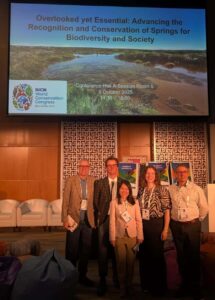
Left to right: Topiltzin Contreras-Macbeath, Joseph Holway, Chouly Ou, Catherine Sayer, john Simaika

Springs, the literal sources of many rivers, received rare attention in this session, which SHOAL co-organised with Re:wild, the International Water Management Institute, the Springs Stewardship Institute, Saint Louis Zoo, and the IUCN Species Survival Commission. It called for global recognition of springs as unique freshwater ecosystems, vital both to biodiversity and to the human communities that depend on them.

The discussion built momentum behind Motion 016 Springs under threat: Mobilising urgent action for neglected freshwater ecosystems, one of two SHOAL-proposed motions at the Congress, both of which were approved and elevated to IUCN Resolutions.

Joseph Holway, Assistant Director at the Springs Stewardship Institute (SSI), said, “At SSI, we have been actively studying and protecting springs for the past four decades, yet their significance has too often fallen on deaf ears. That is why it fills me with hope to see a room full of scientists and conservationists dedicating their time and energy to these systems, these tiny focal points in the landscape that collectively weave together the fabric of biodiversity itself. Without springs, we would have only a fraction of the perennial rivers, wetlands, and ecosystems that sustain life across the planet. It is time that springs receive the attention they deserve as the lifeblood upon which both freshwater and terrestrial biodiversity depend.”

Chouly Ou, Freshwater Fish Conservation Coordinator of SHOAL/Re:wild, addded, “This session provided a much-needed platform for spring experts to meet in person, exchange knowledge, and identify concrete steps to move from motion to action. We discussed the roadmap for protecting springs, the establishment of the IUCN Springs Task Force, and the creation of a Global Springs Alliance. These are essential steps following the adoption of the motion as an official IUCN resolution, and this session marked an important milestone in turning the resolution into coordinated global action”.


Exhibition sessions

Throughout the Exibition sessions, SHOAL and partners highlighted many of the challenges and successes they have been involved in through their work to protect freshwater biodiversity, such as the efficacy of using Other Effective Conservation Measures (OECMS) to solve many freshwater conservation needs, and case studies highlighting how being innovative can help safeguard river connectivity and protect habitats that are highly important for local communities.

Jessica Judith Grefa Huatatoca, a biologist and Indigenous Kichwa woman from Santa Clara, Ecuador, who works with Piatua Resiste to protect the Piatua River and the cultural heritage of the Kichwa people, and who was a panellist in the Innovative Actions for Effective and Resilient Freshwater Connectivity and Conservation session offered some profound words about connectivity: “In the Kichwa tradition, humans are aquatic beings; we don’t say we learn to walk, but that we learn to swim. We are one interconnected, flowing system”.


© Wai Kit
Left to right: Michael Edmondstone, Nerissa Chao, Nathaniel Ng, Shera, and Alex McWilliam discuss ASAP fishes in the IUCN Asia Pavilion. © Wai Kit


Motions and Policy Wins

SHOAL closely followed 15 motions relevant to freshwater conservation. Each was approved, meaning these issues now become formal IUCN policy. Three were debated and adopted in the Members’ Assembly:

  • Motion 067: Living in harmony with rivers through the rights of nature and ecocentric law
  • Motion 094: Recognising the importance of Indigenous languages, knowledge and cultural heritage in biodiversity conservation
  • Motion 108: Development of IUCN guidelines to effectively control the commercial pet trade in terrestrial wildlife

Each adopted Resolution, guides IUCN’s future actions and influences global policy, funding, and awareness.

Motions

Growing the SHOAL

Beyond the sessions, SHOAL’s exhibition booth drew crowds with an interactive fishing game, where visitors could win Priority Fishes posters and learn about the species and people behind them. It proved a fantastic way to spark conversations about freshwater life and the global network working to protect it.

The Congress also marked the first time the entire six-member SHOAL team gathered in person. For a team that works across continents, this made the week especially memorable.

In Abu Dhabi, freshwater voices were loud, united, and full of momentum, showing how much hunger and ambition there is among the wider SHOAL partnership to ensure the 1000 Fishes initiative will succeed. SHOAL leaves the Congress energised and inspired to build on the productive conversations that were had and connections that were made.


SHOAL booth © SHOAL
Georgie Bull’s poster of painted SHOAL Priority Fishes received many justified compliments at the booth. © SHOAL

Trip Diary: Conservation in Southeast Asia with Mike Baltzer

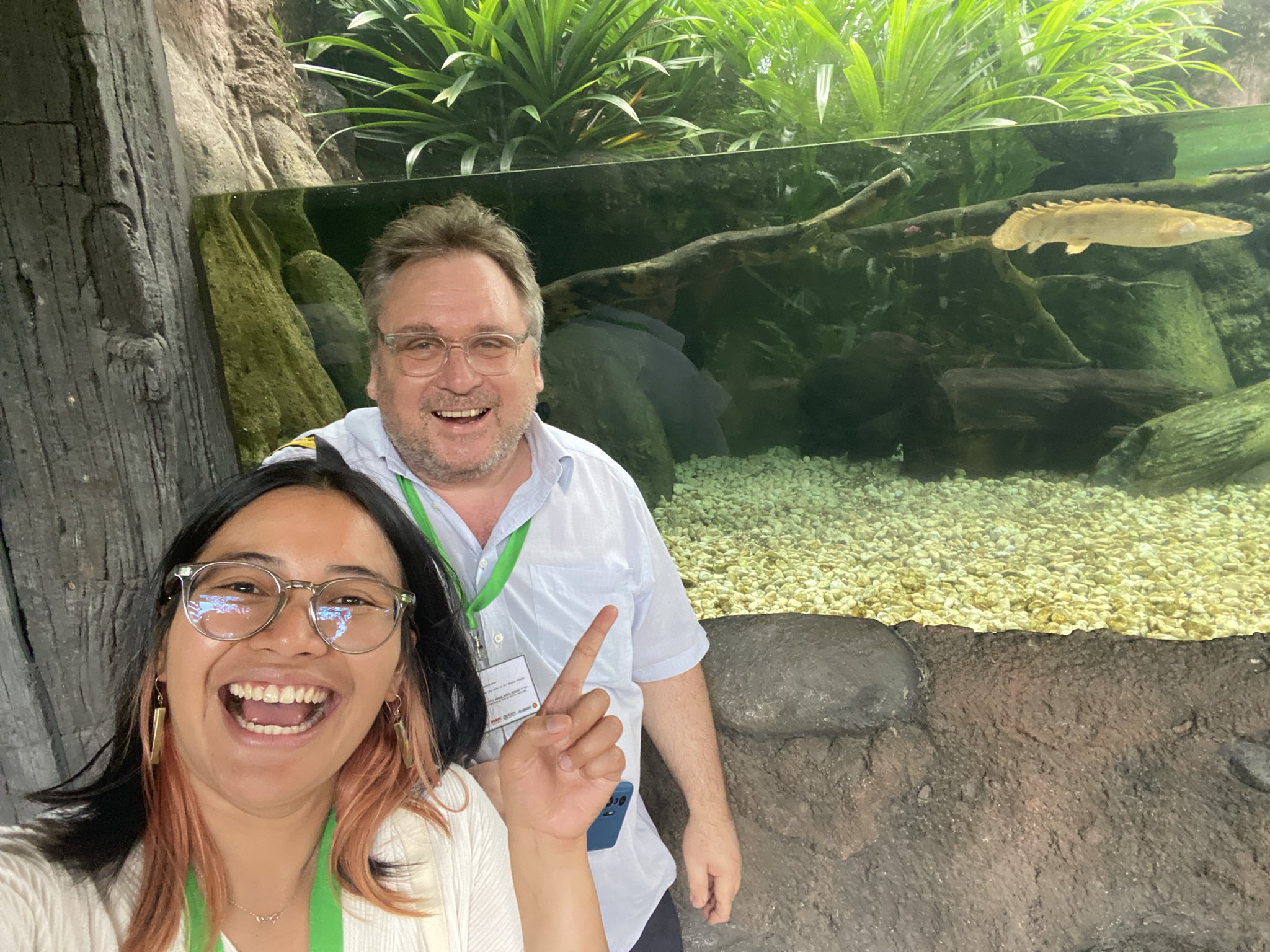
A photograph of a man and a woman in front of an aquarium. Conservation southeast asia.

Come with SHOAL to Southeast Asia to meet conservation partners and visit some of the world’s most exciting freshwater ecosystems first hand.

It’s been a busy Spring for SHOAL’s Mike Baltzer. Our Executive Director has just returned from a journey across Southeast Asia that took him from Singapore to Cambodia to Thailand and back to Singapore.

“The trip gave me an invaluable opportunity to connect with local experts, plan future collaborations and see some of the world’s most biodiverse freshwater ecosystems first-hand.”

Mike Baltzer, SHOAL

First stop Singapore

Starting in Singapore, Mike attended the Association of Southeast Asian Nations (ASEAN) meeting held at the Singapore Zoo, hosted by the IUCN SSC ASAP and Mandai Nature, to begin the process of designing an action plan for species conservation in Southeast Asia.

The meeting brought together experts from the region alongside those with an expertise in writing action plans for threatened species in the region, like Mike. The group discussed the process of developing this ambitious project, and how to ensure the results have the greatest impact.

“The ASEAN expert meeting was a wonderful opportunity to discuss SHOAL and freshwater conservation with national experts and potential partners, and find ways to move forward with action in each of the Southeast Asia countries.”

Mike Baltzer, SHOAL

A photograph of a man and a woman in front of an aquarium. Conservation southeast asia.
© Sheherazade, co-director of PROGRES

Mike was also able to meet up with some of our partners in Singapore including PROGRES, a conservation NGO in Sulawesi, Indonesia, which fuses science with the power of locally-led conservation action. Read more about PROGRES’ amazing work on our blog→

One of Indonesia’s leading conservation specialists Prof. Mirza Kusrini then met Mike for an enlightening and helpful discussion about potential partners in Papua and West Papua in Indonesia.

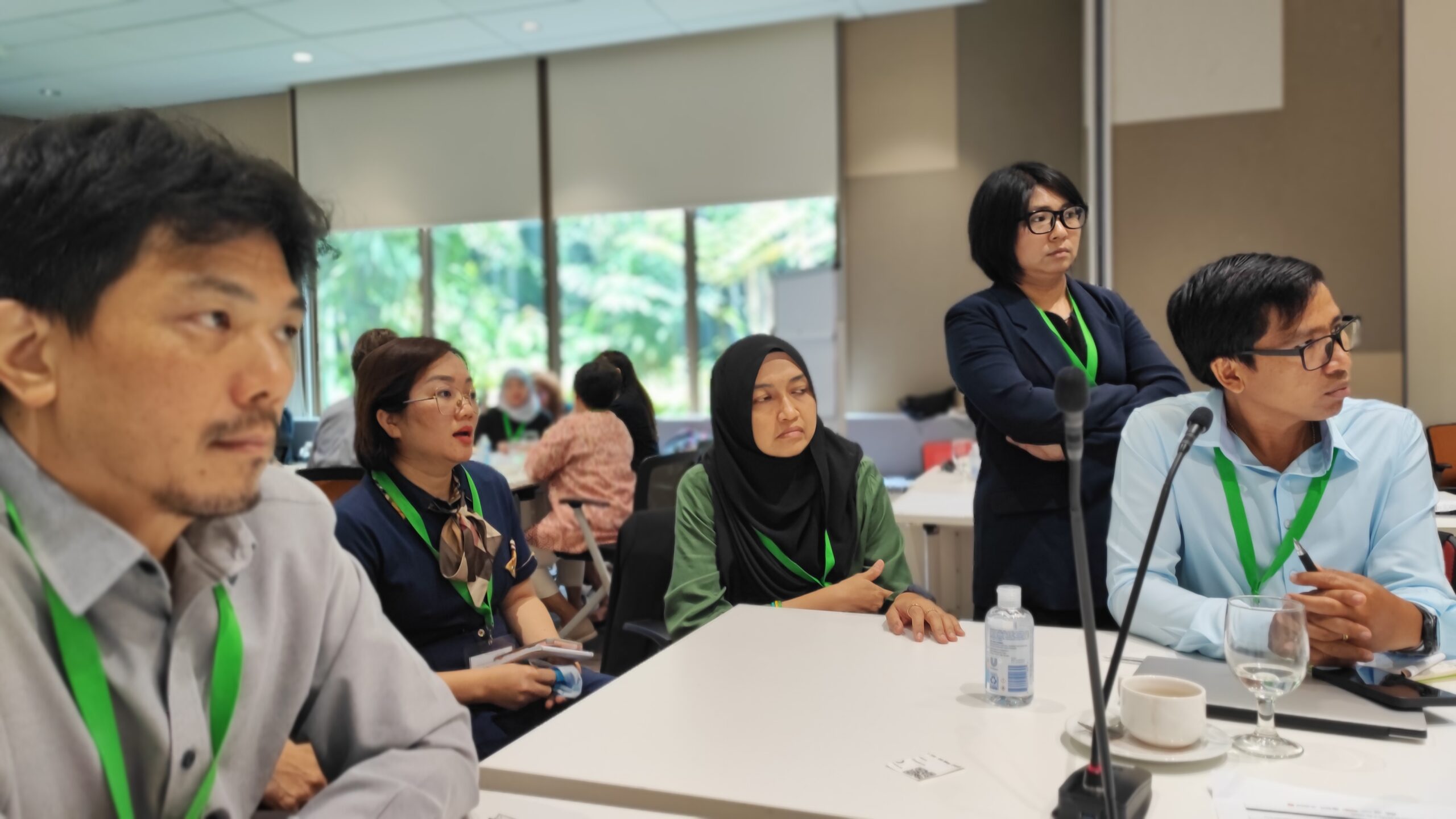
Four people sitting around a table looking forward, in a room with other people also paying attention in the background. Conservation southeast asia. Credit Mike Baltzer
© Mike Baltzer

Onwards to Cambodia

Mike then headed to Siem Reap, the home of the breathtaking Angkor Wat,  to meet potential partners and discuss future activities in the Tonle Sap lake in Cambodia. The area is one of the world’s most large and valuable wetlands.

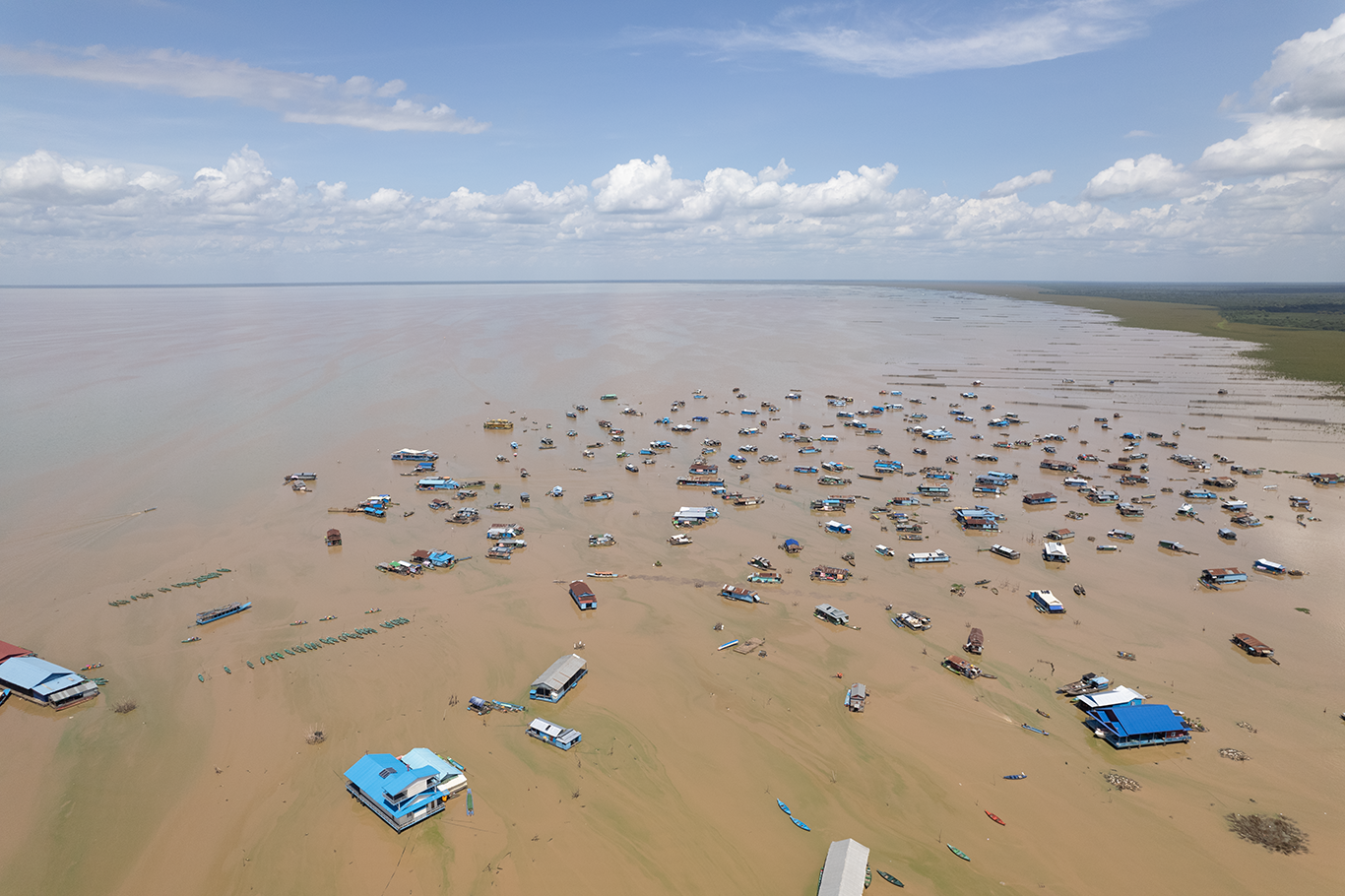
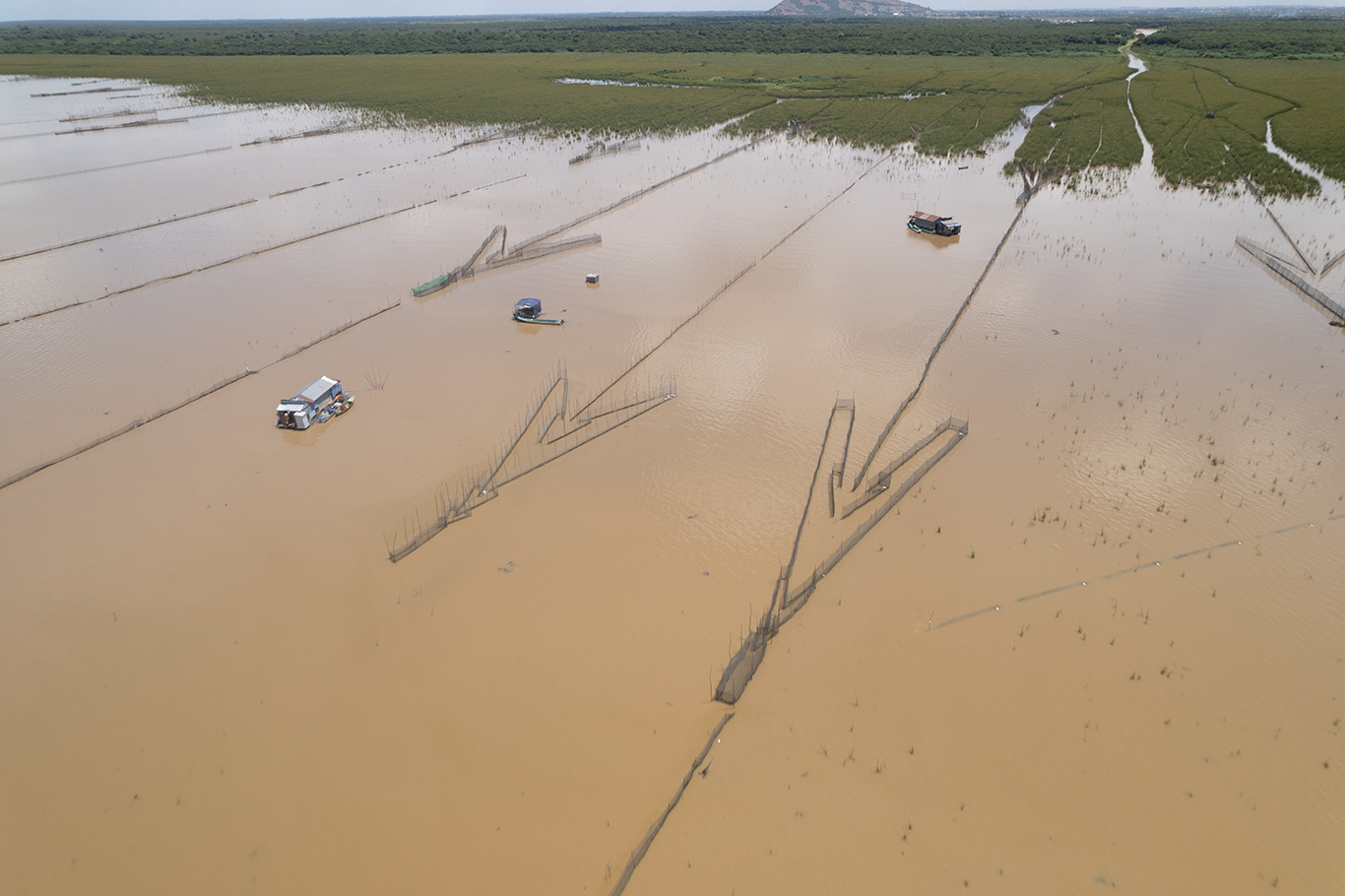
He and the team were able to capture some striking shots of the extensive fisheries on the lake, as well as explore potential conservation projects.

“In Cambodia, I was struck by the damage, caused by the COVID-19 pandemic, to the local economy and threat this now posed to natural resources as people seek ways to pay off loans and restore their businesses and income sources. It was clear to see that the great fisheries of the Tonle Sap were once again a vital source of food security during the toughest times.”

Mike Baltzer, SHOAL

An aerial view of a lake with dozens of floating houses on it. Conservation southeast asia. Credit Ben Hayes
© Ben Hayes
An aerial view of fisheries of the Tonle Sap, which look like big arrows on the lake. Conservation southeast asia. Credit Ben Hayes
© Ben Hayes

Thailand and back to Singapore

On return to Singapore Mike took the opportunity to stop over in Bangkok and meet with Dr Dindo Campilan, Regional Director of the IUCN Asia Regional Office, and his team to explore potential collaboration on projects in the region.

The next day, Mike returned to Singapore for a full day meeting with the IUCN SSC ASAP and Mandai Nature team to prepare for the launch of The Strategic Framework to Accelerate Urgent Conservation Action for ASAP Freshwater Fishes in Southeast Asia on 3rd July 2023.

The trip was drawing to a close, but there’s no way Mike could fly back to the UK without squeezing in a visit to the new Bird Paradise at Singapore Zoo, after being kindly given a ticket.

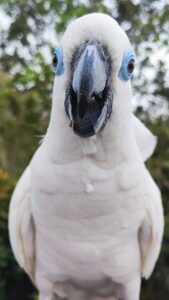
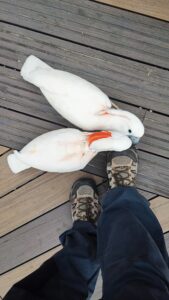
“Bird Paradise is incredible. You can walk through huge aviaries and really feel that you are seeing the birds in the wild – all with clear conservation messages and actions. And of course it was great to be harassed by beautiful salmon-crested cockatoos – one of my favourite birds!”

Mike BaltzerSHOAL

A cockatoo, white with orange crest, looking straight into the camera with its mouth open. Conservation southeast asia. Credit: Mike Baltzer Two cockatoos, white with orange crest, pecking a brown shoe. Conservation southeast asia. Credit: Mike Baltzer

Reflecting back and looking forward

Southeast Asia is considered the region with the highest number of species facing immediate extinction, and freshwater fish make up the largest group with almost 100 species Critically Endangered. As aquatic species in general are overlooked globally amongst conservation actions, there is presently very little targeted conservation action underway.

SHOAL is currently working with the IUCN Species Survival Commission’s Asian Species Action Partnership and Mandai Nature on a major new report which offers conservation hope for Southeast Asia’s most threatened freshwater fish.

“As we prepare for the launch of our new report in collaboration with IUCN SSC, ASAP and Mandai Nature it is important that we meet to discuss with as many local experts as possible on potential projects and partners. There are a lot of ASAP fishes there that need immediate attention so building capacity of local NGOs across the region is a high priority.”

Mike Baltzer, SHOAL

Based in Singapore, Mandai Nature are a conservation non-profit who host organisations including the IUCN Species Survival Commission (IUCN SSC) Center for Species Survival: Southeast Asia, and the IUCN SSC Asian Species Action Partnership (ASAP).

Formed under the IUCN SSC, the Asian Species Action Partnership (ASAP) are an alliance of more than 220 partners working to save Critically Endangered species in Southeast Asia.

A (fresh)watershed moment for the golden skiffia

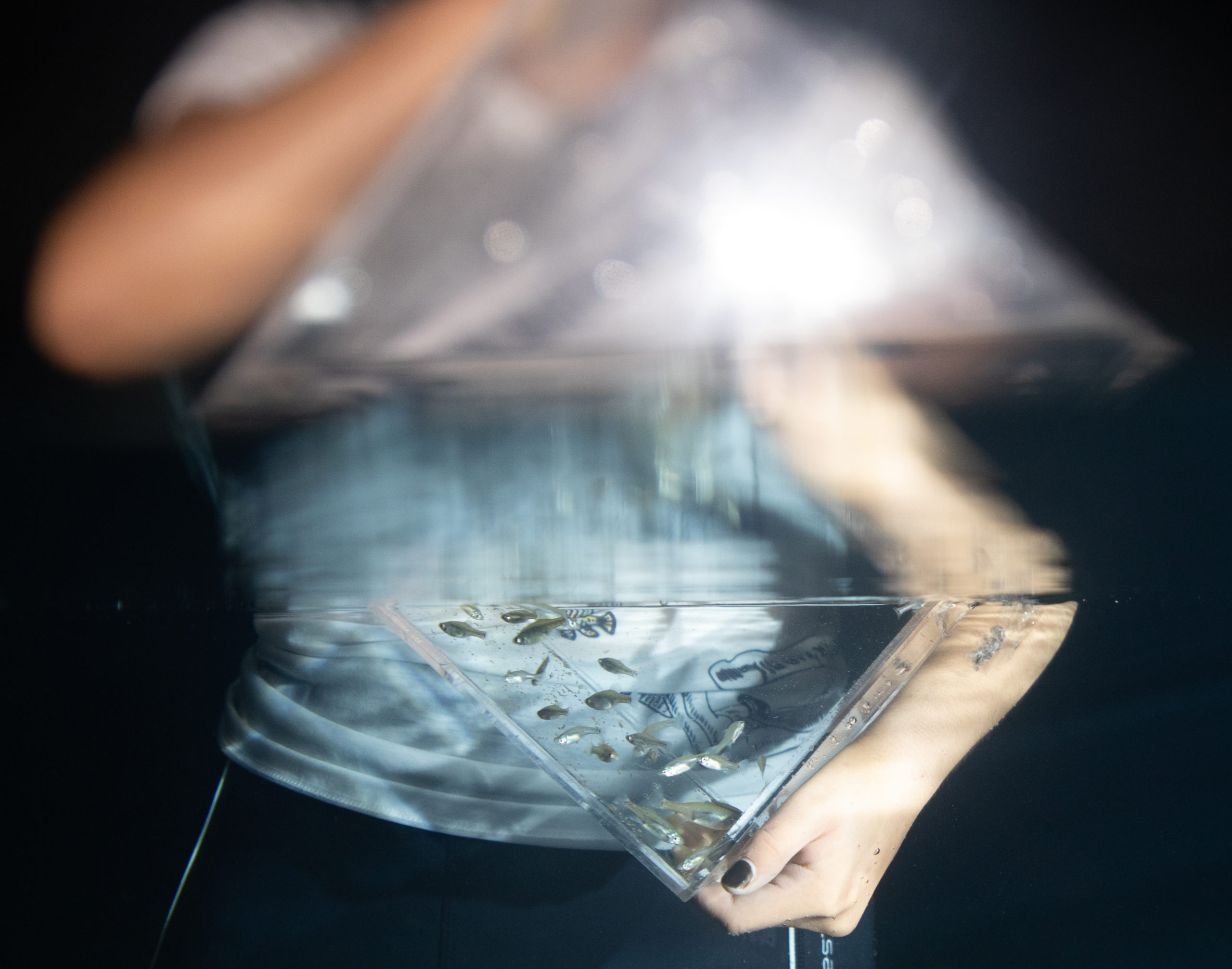
A photograph of a small tank of bred-in-captivity golden skiffia partially submerged in water. Credit Manfred Meiners.

ⓒ Manfred Meiners

Come with SHOAL to Mexico to see Extinct in the Wild golden skiffia reintroduced to the Rio Teuchitlán.

On November 4th 2022 a team from the University of Michoacan, Mexico, reintroduced over 1,000 golden skiffia (Skiffia francesae) into the Rio Teuchitlán. The team was led by Omar Domínguez-Domínguez, and the Goodeid Working Group, with vital support from Chester Zoo.

Just a couple of weeks earlier the SHOAL team packed their bags for Mexico to join them for this (fresh)watershed moment. We also participated in a workshop to plan conservation action for the Mexican goodeids – one of the world’s most threatened groups of fishes.

Time to fly the nest mesocosm

Our first stop was to the Aqua Lab at Michoacan University of Mexico in Morelia to see their breeding facilities. The Fish Ark facility at the university has been breeding golden skiffia in captivity for years in preparation for this re-release.

Fish Ark Mexico is a conservation project in central Mexico that focuses on 41 highly threatened species of freshwater fish. The project has more than 20 years of experience in Mexican fish conservation and has succeeded in keeping 39 species of Endangered and Extinct in the Wild Mexican goodeid species in captivity.

“The Aqua Lab itself is a hugely impressive facility, with three shelves of tanks stretching wall to wall either side, providing ample space for the breeding of threatened fish species, including the golden skiffia and tequila splitfin. Once the fish are fully grown, they are moved to large outdoor pools on the grounds of the Aqua Lab, where they can adapt to living with much more space. Also bred in the Fish Ark are species of Critically Endangered Mexican salamanders.”

Michael EdmondstoneSHOAL

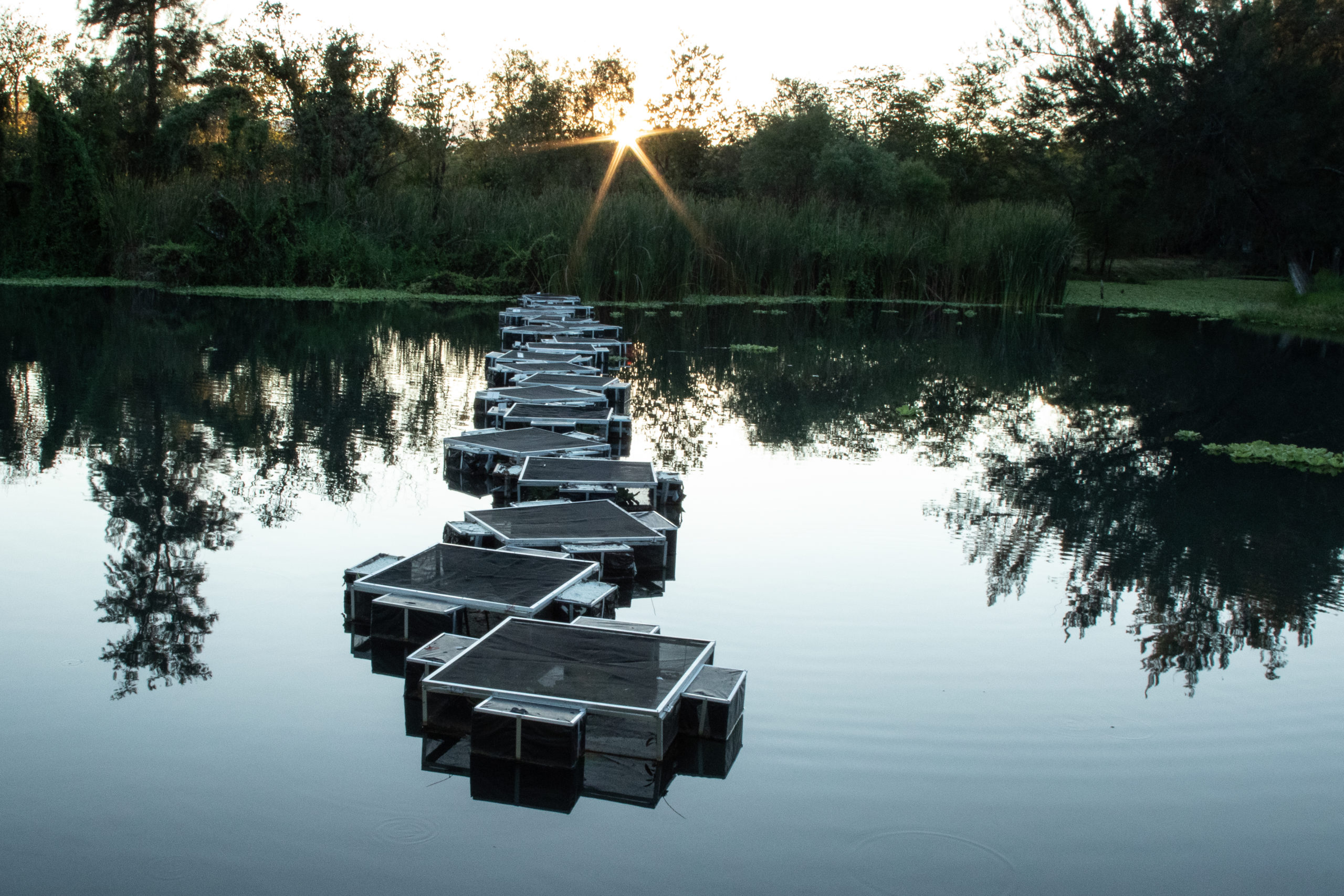
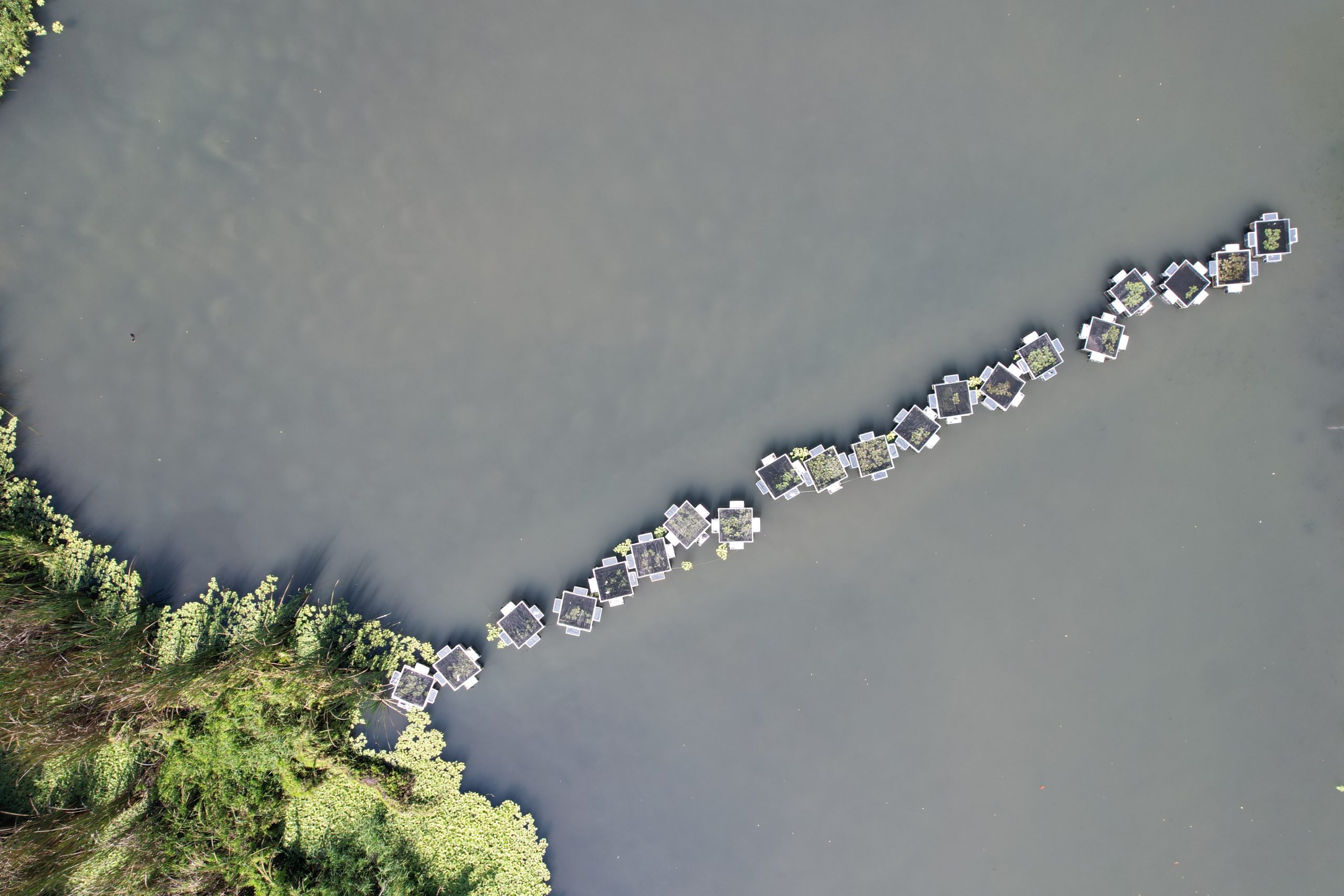
Fishes due for release are dewormed, marked and placed in secure ponds known as mesocosms to prepare them for a return to the wild. The mesocosms float in the species’ natural habitat but are protected by netting, allowing fish to adapt to semi-natural conditions without chance of predation.

Golden skiffia mesocosms in the Teuchitlán river in Mexico. ©Manfred Meiners
©Manfred Meiners/Re:wild

Extinct in the Wild

The golden skiffia has not been seen in the wild since the 1990s. Human impact such as dam construction, water extraction, pollution and the introduction of invasive species have caused major changes to the skiffia’s habitat, pushing it to extinction in its only home.

The release comes six years after the successful reintroduction of the tequila splitfin (Zoogonetcus tequila) which faced very similar threats to the golden skiffia. The species was also bred in a conservation breeding programme and released into the Teuchitlán River.  Domínguez-Domínguez also led that work. The population of tequila splitfin there is now thriving, and the project has been cited as an International Union for the Conservation of Nature case study for successful global reintroductions.

A mural near the Teuchitlán River in Jalisco, Mexico, of Consuela, a local teacher and conservationist, and the golden skiffia
©Manfred Meiners/Re:wild
A young girl from Teuchitlán in Mexico holds up a golden skiffia before its release.
©Manfred Meiners/Re:wild

Back from the dead

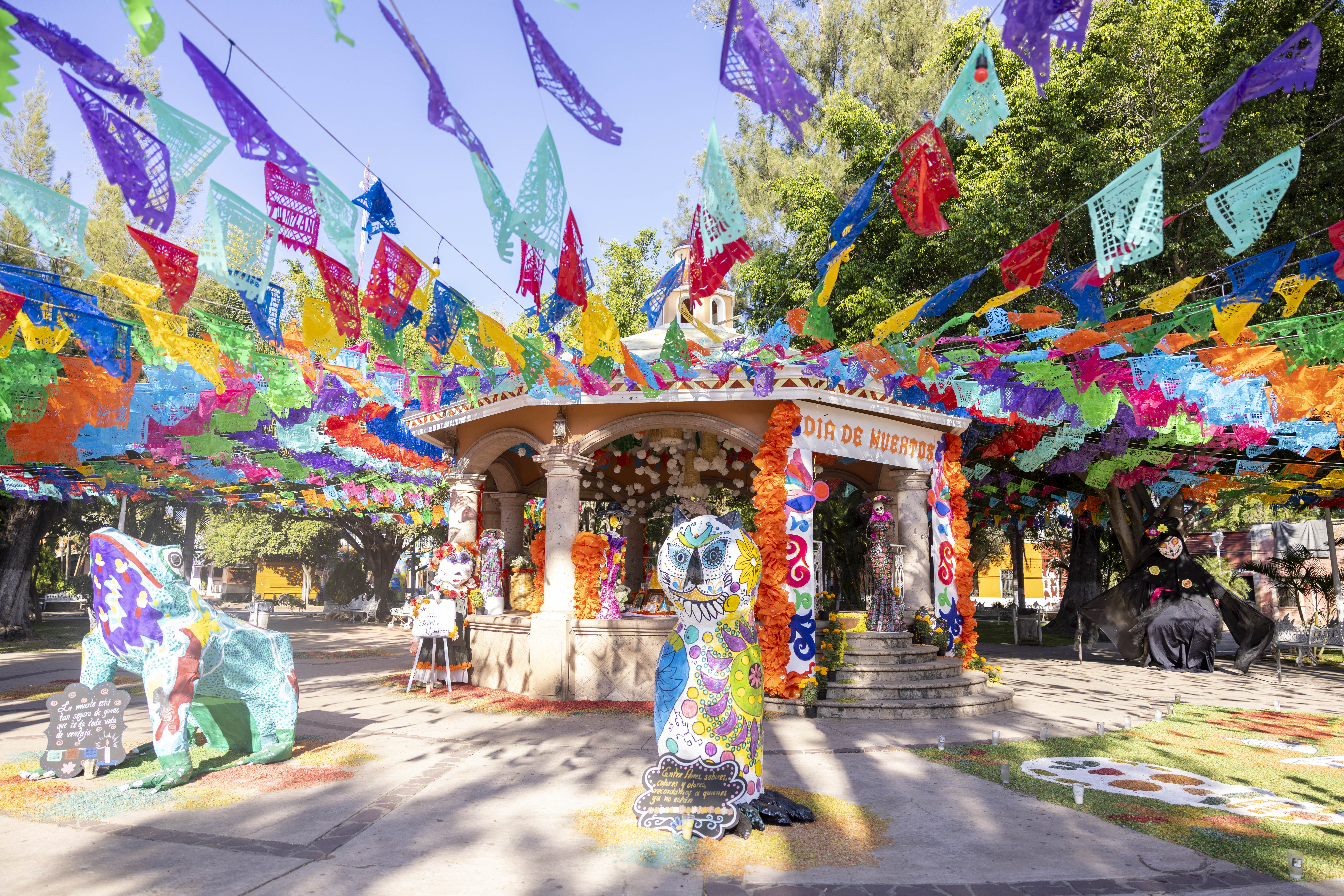
Día de los Muertos, or Day of the Dead, is a celebration of life and death. Being part of this expedition, the SHOAL team got to experience the colourful celebration in all its life-affirming glory.

“The Day of the Dead is a traditional Mexican celebration, when it is believed that people’s deceased ancestors return to the land of the living for one night, to talk and spend time with their families. Releasing the golden skiffia around this time is a metaphor for how the species has come back from the dead to return to its home, not for one night, but forever.” Omar Domínguez-Domínguez, professor and researcher from the Michoacan University of Mexico, who is leading the golden skiffia reintroduction.

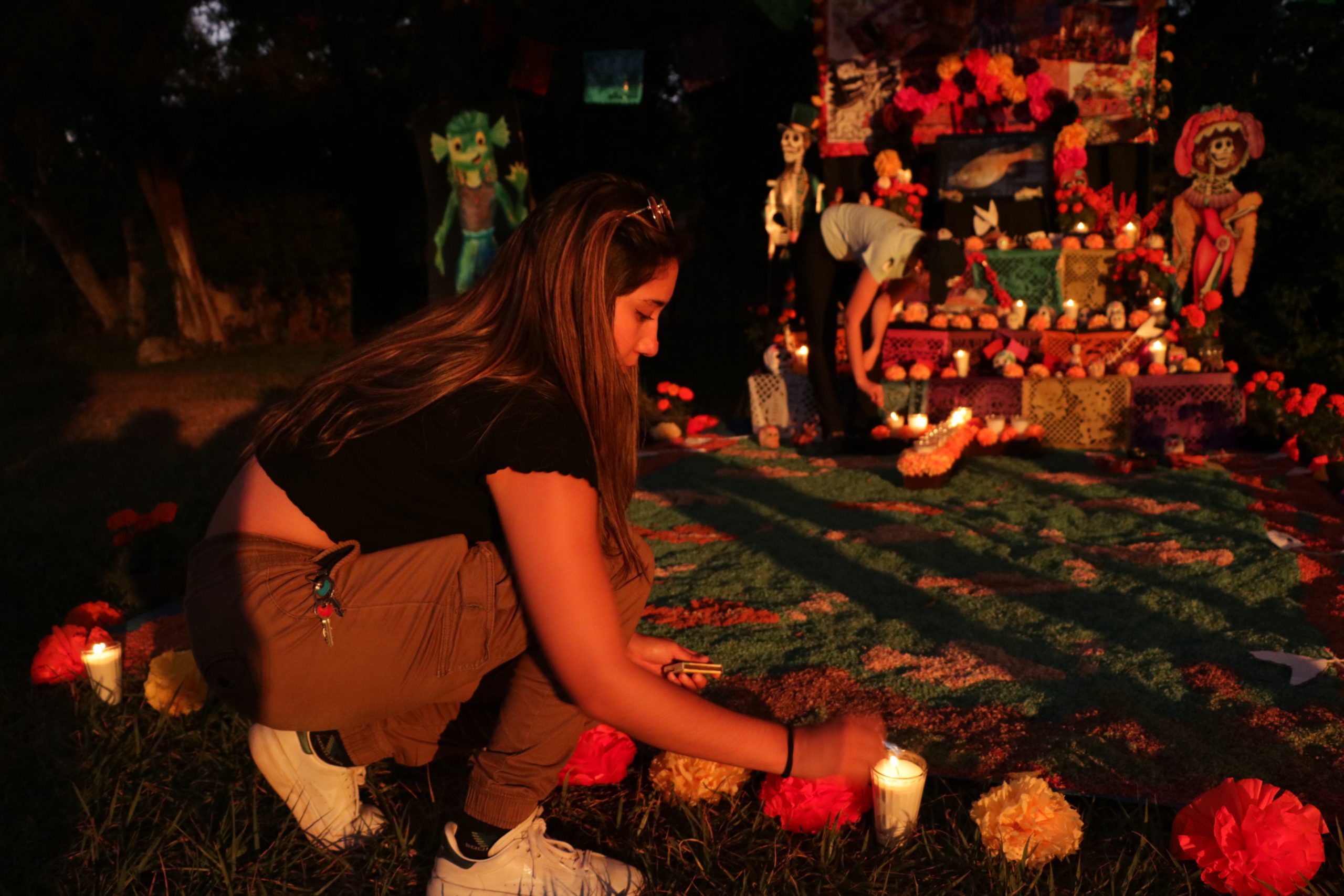
Day of the Dead, or Día de los Muertos celebrations in Mexico. A colourful altar dedicated to the golden skiffia. Credit Manfred Meiners.
©Manfred Meiners/Re:wild
Day of the Dead, or Día de los Muertos celebrations in Mexico, ahead of the golden skiffia release. Colourful decorations in the town. Credit Manfred Meiners
©Manfred Meiners/Re:wild
Day of the Dead, or Día de los Muertos, celebrations in Mexico. A student decorates a golden skiffia themed altar
©Manfred Meiners/Re:wild

Release day

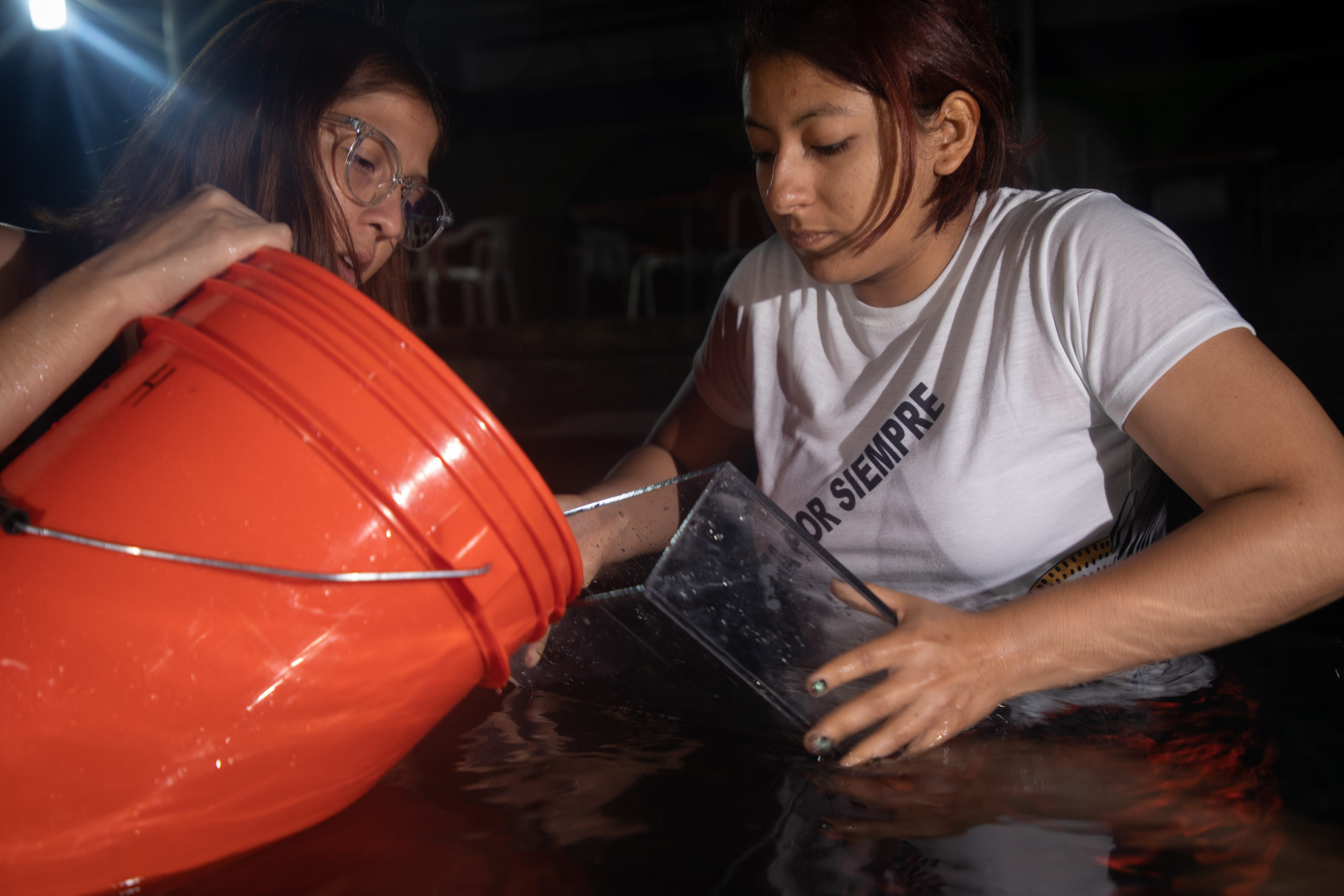
“The golden skiffia release came two days later, on 4 November. The day began at the nearby Guachimontones archeological site, with talks about the golden skiffia, the river and the conservation work achieved, and an awards ceremony to celebrate the hard work of the Guardians of the River. In the evening, traditional Mexican dancing, traditional Indigenous dancing, a theatrical performance and a poetry recital set the mood before a symbolic funeral cortege to the release site marked the skiffia’s demise from the wild. To the sound of rhythmic drumming, local children released 10 skiffia individuals one at a time in a moving and memorable ceremony. The remaining approximately 1,200 individuals were subsequently released.”

Michael EdmondstoneSHOAL

Two women standing waist-deep in the Rio Teuchitlán releasing golden skiffia. Credit Manfred Meiners.
©Manfred Meiners/Re:wild

So what’s next?

Individuals released into the wild are tagged with a non-toxic elastomer before release and will be monitored for the next five years. This assesses whether the population is increasing and whether the fish are reproducing and growing successfully in their natural habitat.

Conservationists hope that the fish released on 4 November will ultimately result in a healthy, self-sustaining population taking hold. Then the species can fulfil its important natural role in the ecosystem of eating algae and mosquito larvae, helping to keep populations of those species in check.

SHOAL is currently working with the University of Michoacan, Chester Zoo, the Goodeid Working Group and a host of other organisations on a conservation plan for each of the threatened Mexican goodeids. If the success of the tequila splitfin reintroduction and the predictions for a successful golden skiffia project are anything to go by, there is good reason to believe this collaborative, interdisciplinary conservation programme will bring these goodeid species back from the brink of extinction.

This project has been made possible…

…by generous funding and support from ZooParc de Beauval, Wilhelma Zoo, Haus des Meers Aquarium, Zoo Ostrava, Poecilia Scandinavia, American Livebearer Association, Mohamed Bin Zayed Species Conservation Fund, Zoological Society for the Conservation of Species and Populations (Zoologische Gesellschaft für Arten- und Populationsschutz – ZGAP), European Union of Aquarium Curators and The Fishmongers’ Company.